
BLOG

Mastering Permit on the Fly in Belize: 6 Essential Tips
Learn 6 essential tips for successful fly fishing for permit in Belize! Discover how to spot, cast to, and land these elusive fish. Expert advice from Blue Horizon guides and staff. These tips will help you catch a permit in Belize.
Fly Fishing for Permit in Belize: 6 Essential Tips
Fly fishing for permit is often considered the ultimate challenge in saltwater angling. These intelligent and wary fish demand precision, patience, and a keen understanding of their behavior. For anglers heading to the beautiful flats of Belize in pursuit of this prized species, mastering a few key techniques can significantly increase your chances of success. At Blue Horizon Belize, our experienced guides have witnessed firsthand what it takes to hook and land a permit on the fly. Here are six essential tips to help you achieve your goal.
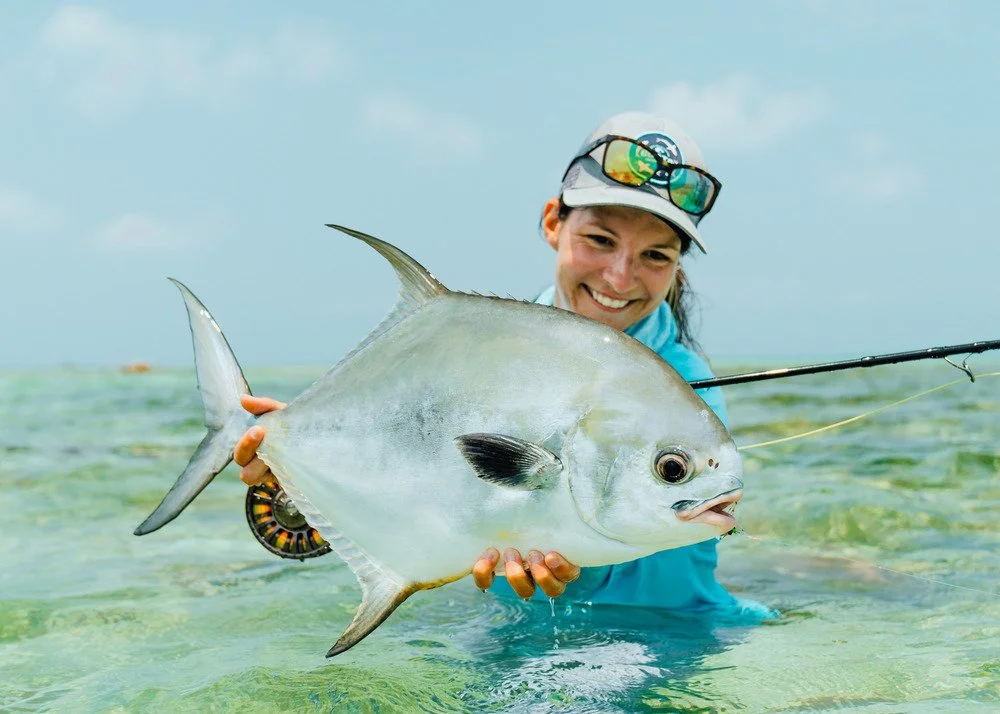
A permit landed in Belize at Blue Horizon Lodge.
1. Spotting Permit: The Art of the Hunt
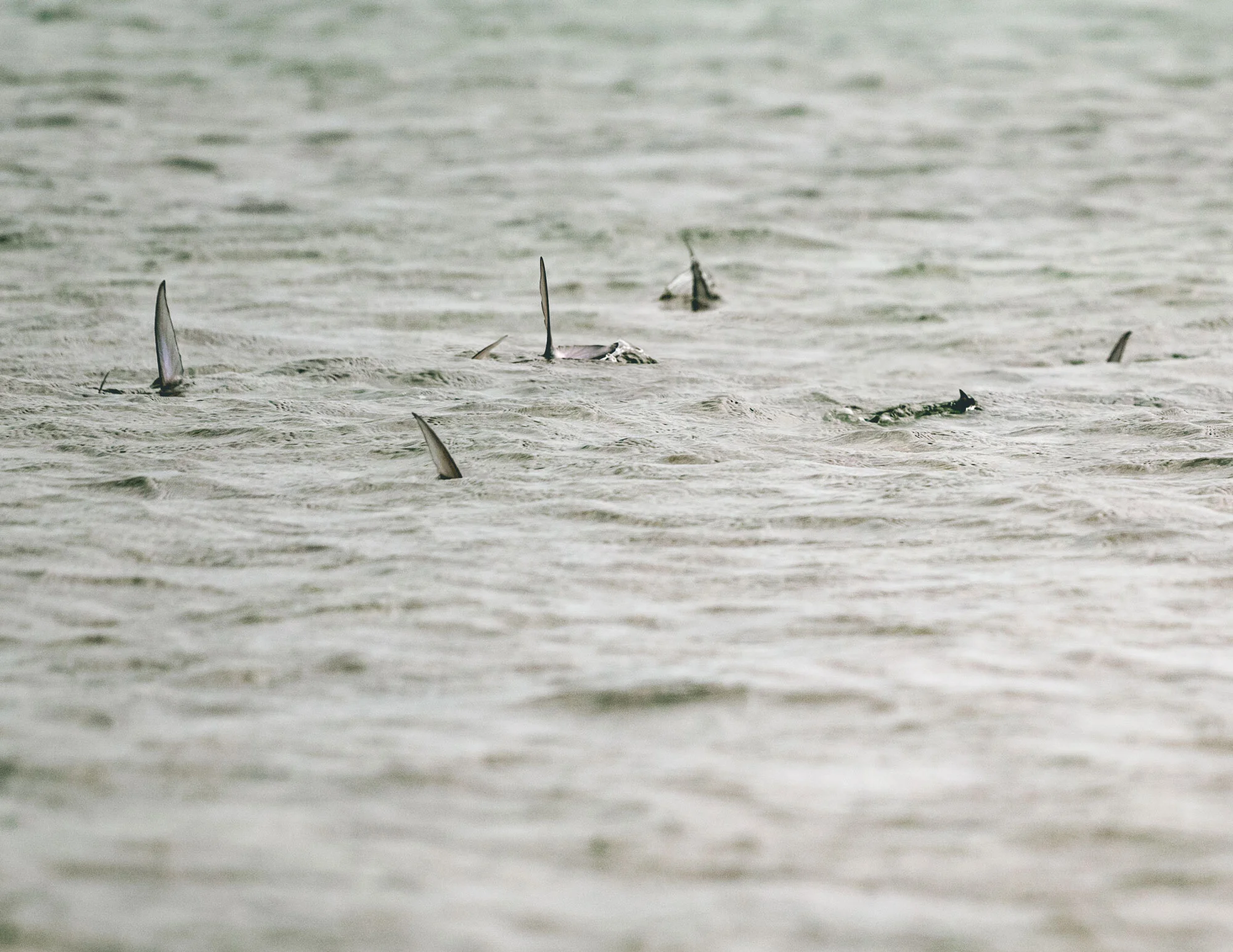
When fly fishing for permit, a crucial first step is mastering the art of spotting permit in their natural habitat. This is often referred to as "hunting." Begin by expanding your field of vision, avoiding focus on any single point. Instead, systematically scan the horizon for "tailing" permit (easiest way to identify these fish) or look beneath the water's surface for "cruising" fish. A helpful technique is to look for interruptions in the natural patterns of the coral or turtle grass bottom or a break in the pattern of the water's surface – these "breaks" in the ocean's rhythm can signal a permit or school of permit. If something catches your eye, quickly focus in that direction to identify the source. The initial sighting of both tailing and cruising permit can be subtle. Try scanning from left to right (or right to left), starting close to the boat and gradually extending your gaze further. Repeat this process methodically.
PRO TIP: Polarized glasses are indispensable for this, so we'll assume you have a good pair. While wearing them, try slightly tilting your head from side to side, at an diagonal. This shift can enhance the polarization effect and improve underwater visibility, especially during the lower light conditions of early morning and late afternoon/evening.
2. Never Lose Sight: Tracking Permit in the Flats
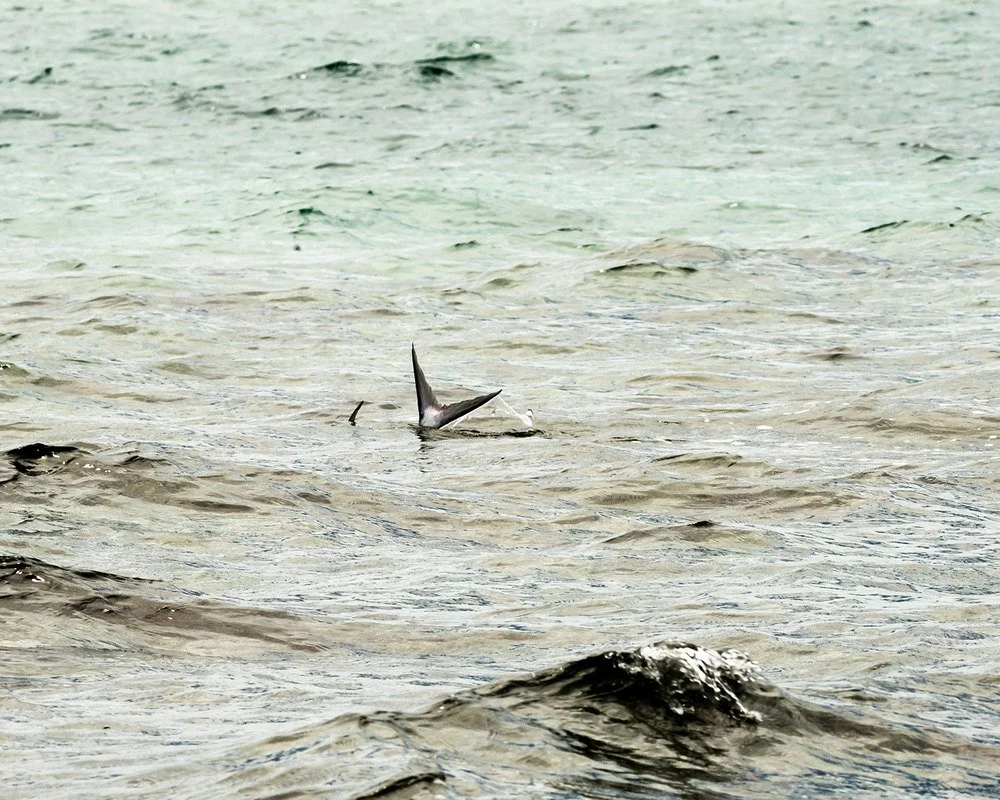
A permit tailing in Belize.

The break in pattern of the water you are looking for.
Once you successfully spot a permit that is tailing or swimming, resist the urge to look away. These fish possess an almost ghostly ability to disappear. One moment they might be clearly visible, and the next, with a swift kick of their tail or a subtle shift of their body, they are gone. If you lose sight of the fish, use your best judgment to anticipate its movement. Consider its swimming speed and direction, and focus your search on where you believe it might have gone. If you observed it swimming in a specific direction at a certain pace, look further out along that path. Often, they will reappear right where you anticipated them to be.
3. Accuracy Over Distance: Effective Casting for Permit

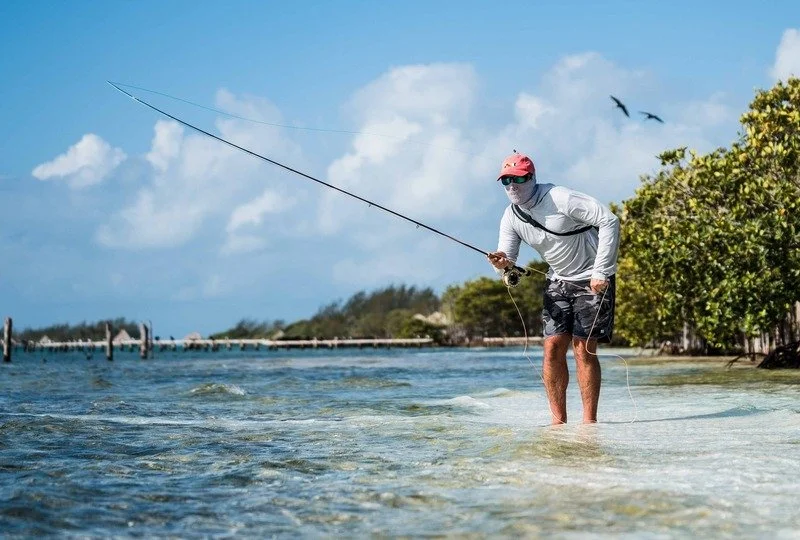
Casting with accuracy increases your odds of catching a permit.
Many anglers believe that catching a permit on the fly requires exceptionally long casts, often thinking they need to reach distances of 70-80 feet or more. However, the reality is that precise fly placement is far more critical than casting distance. Accuracy is the name of the game, and the most successful anglers in fly fishing for permit can deliver their fly with pinpoint precision. You might be surprised at how close to you or the boat these fish will swim, particularly when they are focused on feeding. If you can consistently cast within a 40-50 foot range with accuracy, your likelihood of landing a permit in Belize significantly increases.
Knowing precisely where to cast your fly is key. You need to present the fly close enough for the permit to see it, but not so close that the impact of the fly landing spooks the fish. Often, anglers cast too far away, fearing they will scare the fish. However, a fly cast too far is unlikely to be seen by the fish. The adage "Spook 'em or Catch 'em" holds true. Don't be afraid to cast closer to the permit than your initial instinct suggests. It's generally better to err on the side of casting slightly too close than too far away.
PRO TIP: If the permit is moving quickly, you'll need to cast further ahead of its current position, anticipating where it swimming to, in order to allow the fly enough time to sink – sometimes as much as 10 feet. Conversely, if the fish is tailing and actively feeding, casting a few inches from its face can often be the most effective approach. Trust your instincts to determine the best presentation.
4. Imitate the Prey: Fly Stripping Techniques for Permit
It is important to imitate the prey your fly represents to entice a strike from a permit.
Another common mistake anglers make when fly fishing for permit is stripping the fly too fast, too aggressively, and with too much movement. Our guide team has seen the catch rate of any of our guest improved dramatically once they are able focused on minimizing fly movement (at least while fishing with a grab pattern). Concentrate on keeping the slack out of your line so that any movement of the fly is subtle. More importantly, ensure there is no slack in the line, allows you to feel even the slightest take or if your fly is dragging on the bottom. This subtle approach is particularly effective when using a crab pattern, as crabs typically flee briefly and then try to hide from predators. If you are using a shrimp pattern, a slightly faster retrieve with a series of short, rapid strips often works best.
PRO TIP: Engage with the fish's behavior. Once you see a permit turn its attention to your fly, adjust your stripping action to mimic the natural movement of the fly you are presenting. For a crab pattern, be sure to incorporate pauses in your strip, allowing the fly to sink, imitating a crab fleeing and then seeking cover. When a permit shows interest in your shrimp pattern, you might increase the speed of your strip to simulate a shrimp panicking and trying to evade a predator. Be responsive to the fish's actions. If a permit chases your fly and then stops, experiment with increasing, decreasing, or even stopping your retrieve momentarily. Sometimes, a fish will inspect the fly multiple times before either eating it or rejecting it.
5. The Strip Set: Hooking Permit the Right Way

Don’t trout set!
When a permit eats your fly, remember this crucial rule: NEVER EVER EVER trout set (lifting the rod tip sharply and quickly). Instead, keep the tip of your rod pointed towards the fish and continue stripping the line at the same pace you were using to entice the strike. If the fish eats aggressively and turns quickly, you can release the line to avoid a break-off, as they often hook themselves in this scenario. Sometimes, a permit will eat the fly, but continue swimming towards you. In this situation, it's vital to keep stripping to maintain tension on the line; otherwise, the fish will likely spit the fly before you can achieve a solid hook set. A trout set, lifting the rod tip too early, will almost always result in pulling the fly out of the permit's mouth. By focusing on keeping the rod tip down and maintaining your retrieve until you feel the line pulling firmly from your fingers, you will significantly increase your chances of landing that fish. Once you feel the solid pull, then you can lift the rod tip and fight the fish as you would any other.
6. Breath: Staying Calm When Targeting Permit
Perhaps the most important piece of advice when fly fishing for permit is to control your emotions. These fish have a way of getting anglers incredibly worked up. However, the surge of adrenaline, dopamine, and cortisol can actually work to your disadvantage. Deep, slow breathing is the most effective way to maintain your composure. Inhale deeply to a count of 4 or 5, and exhale slowly to a count of 5 or 6, consciously focusing on relaxing your body as you exhale. Remember, it's just a fish! You've likely caught hundreds of fish before, and by keeping your heart rate steady, you'll make better, more accurate casts, and that permit is far more likely to inhale your fly as soon as it sees your fly!

Keep calm, with deep breaths, in order to make the best cast in these exciting situations.
Successfully fly fishing for permit in Belize is a rewarding experience that tests your skills and patience. By focusing on these six key tips – mastering the art of spotting, maintaining visual contact, prioritizing casting accuracy, employing effective stripping techniques, executing the strip set, and staying calm – you'll significantly enhance your chances of landing one of these magnificent fish during your next trip with Blue Horizon Belize. We look forward to helping you achieve your permit fishing dreams on the beautiful Belizean flats!
For more information about fishing with the team at Blue Horizon Lodge, you can email or call 800-313-1672

Epic Permit Quest in Belize: A Permit Triple Landed in Permit Alley
Kurt Long's story is one of dedication and perseverance. After numerous trips to Belize and Mexico, and countless casts, his 34th day of fishing for permit proved to be the turning point. The film captures the raw emotion and challenges of targeting these finicky fish, showcasing the highs and lows that every angler can relate to.
Fly Fishing for Permit in Belize
Have you ever dreamed of landing a permit on the fly? These elusive fish are the top bucket list catch for many anglers. Known for their challenging nature and the thrill of the chase, you won’t forget catching your first permit. In our film, “Day 24: A Permit Story” we follow Missoula fly fishing guide Kurt Long on his relentless pursuit of this dream in the legendary "Permit Alley" of Belize. Join us at Blue Horizon Lodge as we chronicle his journey, culminating in an extraordinary permit triple!
The Quest Begins: Fly Fishing for Permit in Belize
Belize is renowned as one of the world's premier destinations for permit fishing, and Blue Horizon Lodge sits right in the heart of it all. Located within the South Water Caye Marine Reserve, our lodge provides access to some of the most productive permit flats in Belize. But even in this angler's paradise, catching a permit is no easy feat.
Kurt Long's story is one of dedication and perseverance. After numerous trips to Belize and Mexico, and countless casts, his 34th day of fishing for permit proved to be the turning point. The film captures the raw emotion and challenges of targeting these finicky fish, showcasing the highs and lows that every angler can relate to.
Permit Alley: The Mecca for Fly Fishing Enthusiasts
"Permit Alley" is a name that resonates with fly fishing enthusiasts worldwide. This area, protected within the South Water Caye Marine Reserve, offers pristine flats and an abundance of permit. At Blue Horizon Lodge, founded by Belizean fly fishing legend Lincoln Westby, we pride ourselves on providing anglers with unparalleled access to this incredible fishery.
Our expert guides possess a deep understanding of the local waters and the behavior of permit. They share their knowledge and passion with every guest, helping them navigate the challenges and maximize their chances of success.
The Unbelievable Permit Triple: A Moment to Remember
One of the most remarkable moments in "Day 24: A Permit Story" is when the incredible happens, three permit are caught at the same moment from three different boats. Witness the sheer excitement as Kurt lands his first permit, along with two of his fishing friends land a permit too .
The film captures the magic of fly fishing in Belize and the exceptional experiences that await guests at Blue Horizon Lodge.
Blue Horizon Lodge: Your Ultimate Belize Fly Fishing Destination
If you're planning a fly fishing trip to Belize, Blue Horizon Lodge is the perfect base for your adventure. As the 2023 Orvis Endorsed International Fly Fishing Lodge of the Year, we offer:
Prime Location: Situated in the heart of "Permit Alley."
Expert Guides: Highly skilled and friendly guides.
Modern Amenities: Comfortable accommodations with AC, hot showers, and island-wide Wi-Fi.
Diverse Fishing Opportunities: Target permit, bonefish, and tarpon and more on our pristine flats.
Trip Options: Stay at our dedicated fly fishing lodge, or book full and half-day trips available from Hopkins, Placencia, and surrounding cayes.
Whether you're a seasoned angler or a novice, Blue Horizon Lodge provides an unforgettable fly fishing experience.

Top 4 Permit Flies for Fly Fishing Southern Belize
Permit are regarded as one of the most challenging fish to catch in the sport of fly fishing. Their behavior, the often whimsical feeding patterns, is much less predictable than other flats species. This fact, coupled with their reliance on tides, is why permit have the reputation they have. Of course like all fish, they have their favorite foods; crabs, shrimp, and other crustaceans. For years, pioneers like Lincoln Westby, Charlie Leslie, and Will Bauer have designed flies to elicit the fish’s feeding instinct.
Permit are regarded as one of the most challenging fish to catch in the sport of fly fishing. Their behavior, the often whimsical feeding patterns, is much less predictable than other flats species. This fact, coupled with their reliance on tides, is why permit have the reputation they have. Of course like all fish, they have their favorite foods; crabs, shrimp, and other crustaceans. For years, pioneers like Lincoln Westby, Charlie Leslie, and Will Bauer have designed flies to elicit the fish’s feeding instinct.
Each permit fishery has a unique characteristic, and even some specific flats have certain flies that work better than others. It is also important to consider the best way to present the fly, some fly patterns should be striped, others are more effective when they get little or no movement fished on the ‘drop’. Remember, crabs don’t often flee from their predators. Instead, they hide, burying themselves in the sand and turtle grass.
Here is what we have found to be the go-to-flies on the flats of the best permit fishing flats in Belize.
Number 1: Bauer Crab Fly
The Bauer Crab is hands down the absolute must-have fly for fishing for permit in Southern Belize. Both variations of this fly will produce, in olive and tan. In the South Water Marine Reserve between Dangriga and Placencia, the tan version is the top producer. In the far southern reaches of Belize, the olive variation is the ‘go to’. Developed by the permit pioneer Will Bauer, the fly was honed in after many annual trips to Belize to fish with legendary permit guide Lincoln Westby. This fly has seen more fish brought to hand than perhaps any other crab pattern. The thick body mimics a crab very well and the Rubber Legs give it motion. This fly is best fished ‘still’ or with a slight amount of movement. The broad profile and stiff legs give this fly life like characteristics of a live still crab. It is very common for this pattern to be eaten as it sinks to the bottom, or when perfectly placed in front of a tailing permit. It is recommended to have this pattern in a variety of sizes based on conditions, recommended sizes include 4, 6, and 8.
Number 2: Camo Crab Fly
In Belize, permit eat lots of crabs. This will be evident when you spend some time on the reefs or pancake flats examining what lives underwater. If you flip a few rocks (just like you would on your local trout stream) you’ll see what the permit sees… and eats. One of the most common critters you will find is the small crabs. They range in color for dark green to near white. These multi-colored crabs are the food of permit (and to a lesser extent bonefish). Many of these crabs tend to be no bigger than a nickel, they have short but prominent legs. A normal crab pattern about the size of a quarter is two big, a solid colored crab doesn't look like the real thing. The Camo Crab has begun to give the Bauer Crab a run for the money, as a growing continent of guides is making the Camo their “go to”.
Number 3: Colby’s Casa Blanca Raghead Crab
In the past few years, many of the BHL guides have started using the tan Casa Blanca crab more frequently, and with proven success. The lead eyes on this fly are smallish, making for easier casting, and the fly lands softly, lessening the possibility of spooking fish. This fly should be stripped to activate the rubber legs and to make it look alive. One of the most common shots you’ll experience on these flats are slowly cruising and feeding permit. When you are fishing in this situation, you’ll typically have the best success with a slow-moving fly. A less predictable shot, this situation requires the fly to be delivered close to the permit (but not on the fish). Leading the fish by 1-2 feet can be the most effective (it can also be the most likely to spook the fish off the flats) then a 1 count before stripping the fly.
Number 4: Mantis Shrimp Fly
One of our other favorite permit flies is Bob Veverka’s Mantis Shrimp. The long rubber legs give the fly a lot of movement and fish react best during a slow retrieve. One of the top features is the bead chain eyes. The lighter weight can be fished in shallower water along the reef edges. This fly works great with the cruising permit you often encounter feeding in muddy bottom flats or along the sargassum grass edges. This lightweight fly can be cast extremely close to tailing permit, with little fish of spooking them. Another bonus to this fly is the ability to cast at the unexpected bonefish school that maybe feeding on the same flats.
Southern Belize has long been known as the best permit fishing location in the Caribbean. The prime fishing area is very large ranging from the southern border north to Dangriga. The two most popular areas to fish are the Port of Honduras Marine Reserve and the South Water Caye Marine Reserve. Both offer, short boat rides to protected groups of small most uninhabited mangrove islands and pancake flats. Schools of permit; small groups, and singles feed on the mixed rocky and turtle grass flats. The Bauer Crab is hands down the go to fly for this part of Belize, but many other flies will seduce permit into feeding. Many permit in this region is attracted to sinking or still crabs. Casting your fly just inside the range of the permit’s vision is the best target. If they see the fly, they will undoubtedly move to inspect. Depending on what your guide says, either no movement or a slight twitch is the preferred method of enticing the fish to eat.
If you are armed with our four recommended flies, there will be fewer excuses for not connecting with the coveted permit. For those anglers who are new to the game, we’d like to offer a touch of wisdom; 1. Always trust your guide - if he says to use one of these patterns (or one not on this list), Fish it! 2. The fly only is 40% of the equation for success. 60% is finding the right fish. The ‘right’ fish will eat just about anything your put in front of it.
For more information about fishing in Southern Belize, please contact us at info@BlueHorizonBelize.com or call us at 1-800-313-1672

Belize Fly Fishing Guides
What to look for in a Belize Fly Fishing Guide?
A quality fly fishing guide is what makes the international fly fishing travel experience so enjoyable. So what is that makes a great guide? First and foremost, knowledge of the local fishery and fly fishing expertise. But attitude is also an essential trait to a quality fly fishing guide. Is it a job for the guide? Or it is a passion and way of life? Successful guides will effectively translate their passion of the fishery to you.
Belize Fly Fishing Guides
In the country of Belize, qualified and experienced fly fishing guides can be hard to come by especially during the busy tourist season from December to May if you don’t book ahead. Many renowned fly fishing guides book out quite early, some as far as a year out. While sometimes you can get lucky when a guide has a gap in his schedule but often the top caliber guides are booked and usually booked around the quality tides.
Do note that English is the primary language in Belize. So all fly fishing guides in Belize are English speaking. Some of the guides will speak in the local creole at times.
What to look for in a Belize Fly Fishing Guide?
A quality fly fishing guide is what makes the international fly fishing travel experience so enjoyable. So what is that makes a great guide? First and foremost, knowledge of the local fishery and fly fishing expertise. But attitude is also an essential trait to a quality fly fishing guide. Is it a job for the guide? Or it is a passion and way of life? Successful guides will effectively translate their passion of the fishery to you.
The guides at Blue Horizon Belize are held to the highest standard. They enjoy what they do and are good at what they do. They are professionally trained, held accountable by the other guides and staff, and have an established client base. They are also all insured and have up to date Captain’s Licenses and Tour Guide Licenses. Two credentials that are mandatory for any Belize fishing guides but often overlooked. These credentials are often a good indicator if your guide runs a “tight” program.
How to Become a Fly Fishing Guide in Belize?
In the country of Belize in order to be a fly fishing guide you need to be a Belizean citizen. This regulation has protected the local citizens of this livelihood and has prevented many international fly fishing guides from flocking to the area to open up operations and guide as we have seen in other Caribbean countries like Mexico. If you are a Belizean citizen and want to become a fly fishing guide you will need to retain your tour guide license as well as your captain’s license.
It’s a Family Tradition
Like many other Caribbean fly fishing destinations, guiding is a family business that is passed on generation to generation. Our fly fishing guides were taught by their fathers, who were taught by their fathers and now our guides are teaching their children.
Many family names are very renowned in the Belize fly fishing guide business. Westby, Leslie, Cabral, and Garbutt are just a few of the fly fishing families that work with Blue Horizon and Muy’Ono Resorts.
Of course, Lincoln Westby, the founder of Blue Horizon Lodge and our lead guide, is one family name to mention. Lincoln’s roots are in Hopkins and Dangriga. You can learn more about Westby family fishing HERE.
To the South in Placencia, the Leslie family is known for their fly fishing expertise. Charlie Leslie, the founder of Tarpon Caye Lodge, is a popular guide in Southern Belize. His son Marlon Leslie is one of the most renowned guides in the region and lead guide for Blue Horizon. Ivan Leslie, Blake Leslie, and Bruce Leslie also operate in Placencia with Blue Horizon
Another common family name of fishing guides in southern Belize is Cabral. At Blue Horizon, Steve Cabral is a lead guide and his son, Kevon Cabral, is an aspiring guide in his early 20’s that will be a permit master for years to come.
Down south all the way in Punta Gorda, there’s only one guide name that comes to the mind: Garbutt. The Garbutts are a family of commercial fishermen that have branched into guiding fly fishing. Scully, Oliver, and Eworth are the three brothers who guide out of the Garbutts Fishing Lodge in Punta Gorda and service Copal Tree Lodge.
A quality fly fishing guide is hard to come by, a top-caliber guide can be expected when you book with Blue Horizon, at the Lodge or at any of our partner hotels.
![Permit Fly Fishing 101 [With Basic Tips]](https://images.squarespace-cdn.com/content/v1/55267a84e4b0410f3276ac29/1588198782112-2SQW8CO13CION1EQ8NOO/Screen+Shot+2020-04-29+at+3.18.09+PM.png)
Permit Fly Fishing 101 [With Basic Tips]
…Our experienced guides greatly increase your chance of catching this tricky fish.
Basic Tips to Permit Fishing:
Make sure you are confident and familiar with the gear you are using. Be sure to cast the fly rod prior to the trip or as soon as you get on the boat. You want to be able to cast the fly accurately into a dinner plate-sized target at about 40 feet.
Permit Fly Fishing 101 [With Basic Tips]
Permit, are known as the "Holy Grail" of fly fishing, are by far the most difficult, picky and frustrating fish you'll encounter on the flats. They have superb eyesight and a well-developed sense of smell.
Due to body shape, permit seem to be much more comfortable in deeper water. Although it is fairly common to see a permit with its tail and dorsal fin sticking out of the water, it usually won't remain that way for long. Permit seem to suddenly appear on a flat for a brief feeding spree and then fade back into the safety of the deeper water. They're constantly on the move.
Quick, accurate casting skills (and a lot of luck) are essential. Our experienced guides greatly increase your chance of catching this tricky fish.
Basic Tips to Permit Fishing:
Make sure you are confident and familiar with the gear you are using. Be sure to cast the fly rod prior to the trip or as soon as you get on the boat. You want to be able to cast the fly accurately into a dinner plate-sized target at about 40 feet.
Assess every encounter differently. Since permit can be tough to catch, each encounter with them is different. So be aware of each scenario, ask yourself different questions. Is this fish tailing? Is this fishing moving? Is it a school of fish? Just a single fish? Is there chop to the water or is it straight calm? All these different questions will change the way you target the fish. So ask your guide what he would do in these different scenarios.
Keep in mind to try to cast the fly far enough away from the fish that the splash will not spook it but close enough that it will first notice the fly when the pattern drops through the water column.
Never give up on a fish. If you think you blew the shot and permit spooked, don’t give up. It’s common for a permit to initially spook and then come back and eat the fly. So listen to your guide and watch the fish closely. And never pull that fly out to early. Most permit anglers have made this mistake before.
Understand the hookset. A big part of catching the permit is getting a proper hookset. The first step to do this is to make sure you have the slack out of the line and you are tight to the fly. So after you make a cast, typically you will need to strip in a little to get the slack out. Once the slack is out you have a tight connection to the fly and can almost feel when the permit eats. Watch the fish closely and listen to your guide. If the fish eats it set the hook with a strip set and never lift that rod tip up.
Think about how to land a permit before you hook a permit. What do you do once you hook a permit? More often than not you are going to let this fish run and the guide will use the boat to the advantage. In Belize, coral can break you off very fast, so if you are around any coral raise the rod high so that the line does not wrap on coral. Also, be sure to clear your slackline easily and avoid wrap-ups on unnecessary gear.
SUGGESTED GEAR:
Rod: 8,9, or 10 wt (Stiff to cast crab patterns in the wind). Standard is a 9 foot 4 piece rod.
Reel: Anodized, corrosion resistant saltwater model. Should be able to hold a full line plus 300 yards of 20 or 30 lb. backing. A high quality smooth disc drag is essential.
Line: Tropical Floating Line to match the line weight.
Leaders: 10 ft. 16 pound leaders are standard. Extra spools of 16 and 20 lb. Saltwater tippet are nice to have.
Flies: A large selection of crab and shrimp patterns in a variety of sizes, colors, and weights. Tan, olive and various shades of brown seem to be the most effective colors for most Belizean waters. Be sure to have a variety of different sink rates.
Hopefully, these tips and gear recommendations will help you in your journey to catching more permit on the fly. Be sure to send us an email to check availability for guided fly fishing in Belize and availability at the Blue Horizon Lodge. One of the finest permit destinations in the world.