BLOG

Fly Fishing for Tarpon in Belize: Our Guide to the Best Tarpon Fishing
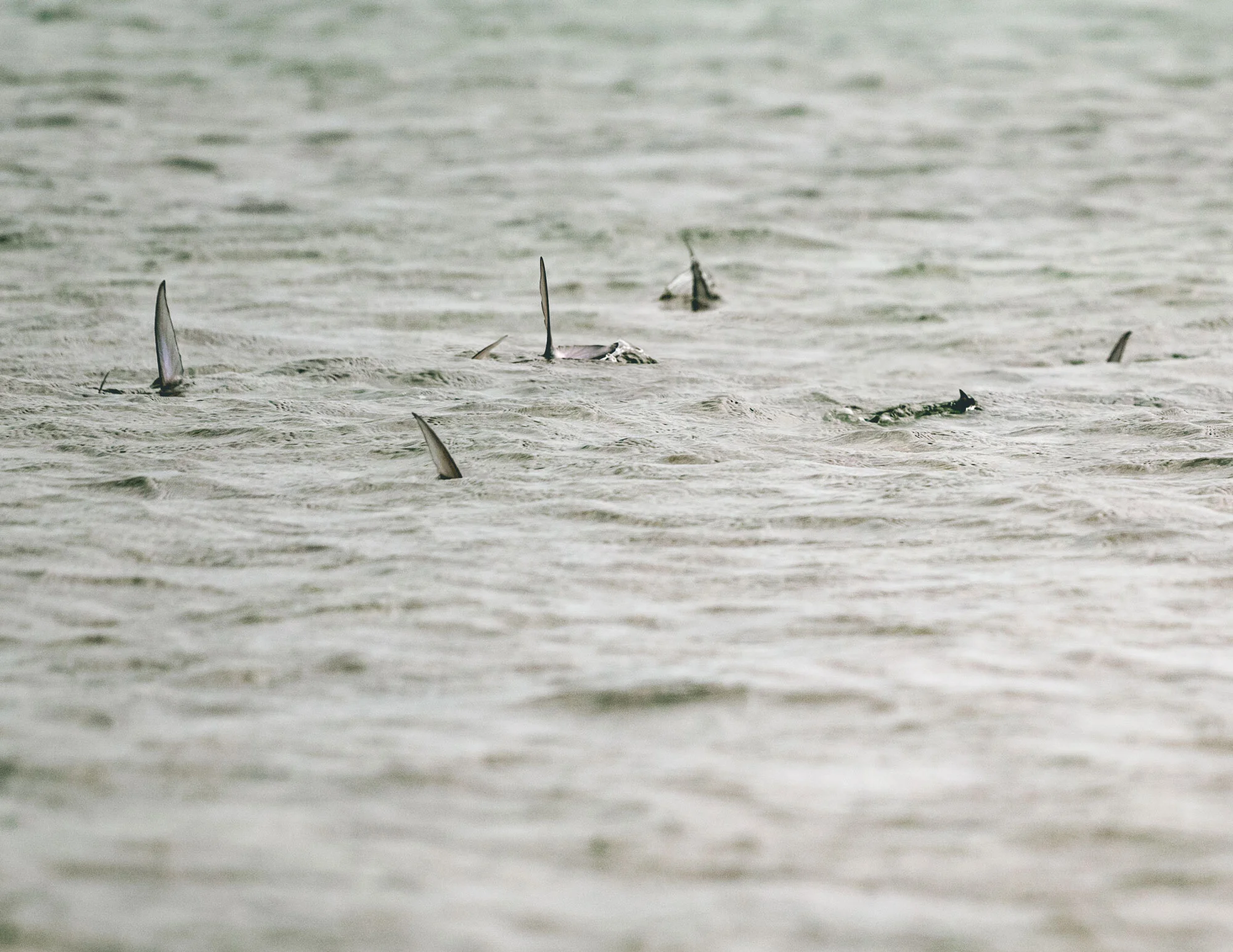
What makes the tarpon, scientifically known as Megalops atlanticus, so captivating? Beyond their size and fighting prowess, they possess remarkable adaptations. Despite being a premier saltwater game fish, they can thrive in freshwater and brackish environments. Their primitive lung allows them to gulp air at the surface – a signal for anglers hunting for ‘rollers’ the creeks, rivers, or channels. Seeing a tarpon rolling on the surface is an invitation for a well-placed cast near where the last "roll" often results in an explosive eat.
Experience the Thrill: Tarpon Fishing in Belize - Your Ultimate Guide to the Silver King
Belize, a jewel in Central America, isn't just about stunning beaches and vibrant culture. For anglers worldwide, it's hallowed ground – the ultimate destination for tarpon fishing. The mere whisper of "Belize" evokes images of sun-drenched flats and the electrifying silver flash of a mighty tarpon erupting from the tranquil ocean surface with fierce aggression as you hang on to your rod for dear life. This isn't just fishing; it's an all-consuming passion, a relentless pursuit of a prehistoric creature, which can exceed 200 pounds, draws anglers from around the globe to some of the most fabled flats in the Caribbean.
The battle with a tarpon is not for the faint of heart, nor the weak of back nor will. Never underestimating their raw power and ballistic energy bursts. This is why many guides demand their anglers use an 11 or 12 weight rods, so they can land the fish quickly and unharmed. Once the hook is set, prepare for an epic duel marked by breathtaking aerial acrobatics and tug-o-wars of sheer brute force. It's common for fish over 60 pounds to peel line off your reel, screaming deep into the backing. Land one of these silver kings, and you'll understand the obsession – and the satisfying exhaustion that follows!

The Unique Allure of Tarpon
What makes the tarpon, scientifically known as Megalops atlanticus, so captivating? Beyond their size and fighting prowess, they possess remarkable adaptations. Despite being a premier saltwater game fish, they can thrive in freshwater and brackish environments. Their primitive lung allows them to gulp air at the surface – a signal for anglers hunting for ‘rollers’ the creeks, rivers, or channels. Seeing a tarpon rolling on the surface is an invitation for a well-placed cast near where the last "roll" often results in an explosive eat.
Prime Tarpon Habitats in Belize
Belize offers a diverse range of environments for targeting tarpon, each presenting unique challenges and rewards:
Flats and Ocean Lagoons: This is the quintessential tarpon fishing experience. Imagine drifting across shallow, clear ocean waters, often chest-deep, as your experienced guideexpertly poles the boat, and scans for these special fish. Their eyes scanning for the subtle shadow or movement of a cruising tarpon. In ideal conditions, these magnificent fish can be spotted from considerable distances, providing ample time for strategic positioning and fly presentation. Floating fly lines are the preferred choice here, allowing for "head-on" or "crossing" presentations to intercept patrolling fish. The famed tarpon flats of northern Belize – Miami Beach, Long Caye, and Savanna Flats – hold tarpon year-round, with peak season during the summer months.
Creeks and Rivers: In these often murky, brackish waters, blind casting becomes a highly effective technique. The invaluable knowledge of a local guide significantly increases your chances of success. They'll direct your casts to areas where tarpon are frequently seen rolling or have been consistently caught in the past. Intermediate full sinking lines or sink tip lines are your best tools in this environment. The tarpon inhabiting these waters are typically "juvenile" tarpon, ranging in size from a few pounds up to around 30 pounds.
River Mouths: Where the nutrient-rich brackish water meets the saltwater, river mouths become prime feeding zones for tarpon (and other species like snook and jacks). Similar to fishing rivers and creeks, these confluence zones attract large schools of baitfish. Targeting river mouths just after or during a flooding event can be particularly productive as the high waters flush out a bounty of forage fish. Keep a keen eye out for rolling tarpon and "nervous" water – indicators of feeding activity. Again, blind casting with an intermediate fly line is often the most effective approach.
Channels: The deep channels that carve through the coral reefs are prime locations for both resident and migratory tarpon. Here, it's not uncommon to find these two groups mingling. Typically, these "ocean" tarpon are larger, with encounters of fish under 40 pounds being rare, and trophy-sized fish easily pushing into the triple digits. Fishing during a tide "swing" – either nearing the peak of the outgoing or the incoming tide – is crucial, as moving water can motivate tarpon to “go on the feed”. Given the depth of many channels (up to 50 feet), a heavy sink tip fly line is essential. Our preferred choice for this type of tarpon fishing is the Rio Leviathan 500 grain sink tip.

Planning Your Belize Tarpon Fishing Trip: Timing is Key
Belize experiences distinct wet (June to November) and dry (December to May) seasons. While temperatures remain relatively consistent, these seasons significantly influence fishing success. While tarpon can be found through out the year, certain times of the year have increased likelihood of encountering them.
December – January: During the ‘winter’ months, remnants of North American cold fronts can bring clouds, rain, and wind (a strong "Nor'easter" in the States often translates to tougher fishing in Belize the following week), and temperatures can dip into the 70s, feeling surprisingly cooler. Your guide might even sport a puff coat and beanie! Weather can be the most significant factor during this time of the year. If the weather has been calm and clear for a few days, you will likely have great fishing for all species. But, if a cold front comes down from the north, it can be difficult to even find any fish (they must move to deeper water that has the temperature they prefer). However, extended periods of northerly winds can push baitfish into sheltered areas, attracting concentrations of resident tarpon and cruising snook. Finding a school of tarpon crashing a concentration of bait, is about the only silver lining to ‘cold front’ season.
February – May: This is the prime time for serious permit fishing, as water temperatures on the flats move in the ideal for permit. Bonefishing remains excellent, and tarpon fishing steadily improves. The first migratory tarpon typically arrive around the full moon in April or May, remaining in good numbers until early fall and when concentrations of bait fish are found, the tarpon are almost always right there with them.
June – August: Prepare for the peak of the tarpon migration! This is when the largest tarpon arrive in consistent numbers, with many exceeding the coveted 100-pound mark. Often light winds during this period enhance visibility and casting accuracy for all species. This is also the optimal time for a Grand Slam (catching a tarpon, permit, and bonefish in a single day), as permit flats remain productive, and the lack of angling pressure can make them less wary. Bonefish can be found with almost guaranteed consistency.
September – mid-November: If Tropical Storm or Hurricane is going to threaten Belize, it will most likely happen in this window. But don’t let that spook you off. While weather can be unpredictable, the fishing for tarpon, bonefish, and permit can be exceptional. On calm clear days, your chances of having great fishing for permit, tarpon and bonefish, are as high as any other month. But, when rain prevails, sight fishing can be challenging, making blind casting in rivers, creeks, and channels a productive strategy for landing quality tarpon.
Whether you're a seasoned angler or a newcomer to the sport, the allure of tarpon fishing in Belize is undeniable. It's more than just a fishing trip; it's an immersion into a world of powerful fish, stunning landscapes, and the unwavering pursuit of the Silver King.

At Blue Horizon Lodge, we are fortunate to have a resident school of tarpon frequently seen rolling just off the coral reef in front of the lodge, offering year-round opportunities. These resident fish are often joined by migrating tarpon, forming impressive schools of 50 or more. It is common for our guides to suggest going out for a quick fishing session before breakfast and our guests to have a tarpon to hand before the day has really begun.
Are you ready to answer the call?
For more information about fly fishing for tarpon at Blue Horizon Lodge, please email: info@bluehorizonbelize.com or call 1-800-313-1672

Top 4 Permit Flies for Fly Fishing Southern Belize
Permit are regarded as one of the most challenging fish to catch in the sport of fly fishing. Their behavior, the often whimsical feeding patterns, is much less predictable than other flats species. This fact, coupled with their reliance on tides, is why permit have the reputation they have. Of course like all fish, they have their favorite foods; crabs, shrimp, and other crustaceans. For years, pioneers like Lincoln Westby, Charlie Leslie, and Will Bauer have designed flies to elicit the fish’s feeding instinct.
Permit are regarded as one of the most challenging fish to catch in the sport of fly fishing. Their behavior, the often whimsical feeding patterns, is much less predictable than other flats species. This fact, coupled with their reliance on tides, is why permit have the reputation they have. Of course like all fish, they have their favorite foods; crabs, shrimp, and other crustaceans. For years, pioneers like Lincoln Westby, Charlie Leslie, and Will Bauer have designed flies to elicit the fish’s feeding instinct.
Each permit fishery has a unique characteristic, and even some specific flats have certain flies that work better than others. It is also important to consider the best way to present the fly, some fly patterns should be striped, others are more effective when they get little or no movement fished on the ‘drop’. Remember, crabs don’t often flee from their predators. Instead, they hide, burying themselves in the sand and turtle grass.
Here is what we have found to be the go-to-flies on the flats of the best permit fishing flats in Belize.
Number 1: Bauer Crab Fly
The Bauer Crab is hands down the absolute must-have fly for fishing for permit in Southern Belize. Both variations of this fly will produce, in olive and tan. In the South Water Marine Reserve between Dangriga and Placencia, the tan version is the top producer. In the far southern reaches of Belize, the olive variation is the ‘go to’. Developed by the permit pioneer Will Bauer, the fly was honed in after many annual trips to Belize to fish with legendary permit guide Lincoln Westby. This fly has seen more fish brought to hand than perhaps any other crab pattern. The thick body mimics a crab very well and the Rubber Legs give it motion. This fly is best fished ‘still’ or with a slight amount of movement. The broad profile and stiff legs give this fly life like characteristics of a live still crab. It is very common for this pattern to be eaten as it sinks to the bottom, or when perfectly placed in front of a tailing permit. It is recommended to have this pattern in a variety of sizes based on conditions, recommended sizes include 4, 6, and 8.
Number 2: Camo Crab Fly
In Belize, permit eat lots of crabs. This will be evident when you spend some time on the reefs or pancake flats examining what lives underwater. If you flip a few rocks (just like you would on your local trout stream) you’ll see what the permit sees… and eats. One of the most common critters you will find is the small crabs. They range in color for dark green to near white. These multi-colored crabs are the food of permit (and to a lesser extent bonefish). Many of these crabs tend to be no bigger than a nickel, they have short but prominent legs. A normal crab pattern about the size of a quarter is two big, a solid colored crab doesn't look like the real thing. The Camo Crab has begun to give the Bauer Crab a run for the money, as a growing continent of guides is making the Camo their “go to”.
Number 3: Colby’s Casa Blanca Raghead Crab
In the past few years, many of the BHL guides have started using the tan Casa Blanca crab more frequently, and with proven success. The lead eyes on this fly are smallish, making for easier casting, and the fly lands softly, lessening the possibility of spooking fish. This fly should be stripped to activate the rubber legs and to make it look alive. One of the most common shots you’ll experience on these flats are slowly cruising and feeding permit. When you are fishing in this situation, you’ll typically have the best success with a slow-moving fly. A less predictable shot, this situation requires the fly to be delivered close to the permit (but not on the fish). Leading the fish by 1-2 feet can be the most effective (it can also be the most likely to spook the fish off the flats) then a 1 count before stripping the fly.
Number 4: Mantis Shrimp Fly
One of our other favorite permit flies is Bob Veverka’s Mantis Shrimp. The long rubber legs give the fly a lot of movement and fish react best during a slow retrieve. One of the top features is the bead chain eyes. The lighter weight can be fished in shallower water along the reef edges. This fly works great with the cruising permit you often encounter feeding in muddy bottom flats or along the sargassum grass edges. This lightweight fly can be cast extremely close to tailing permit, with little fish of spooking them. Another bonus to this fly is the ability to cast at the unexpected bonefish school that maybe feeding on the same flats.
Southern Belize has long been known as the best permit fishing location in the Caribbean. The prime fishing area is very large ranging from the southern border north to Dangriga. The two most popular areas to fish are the Port of Honduras Marine Reserve and the South Water Caye Marine Reserve. Both offer, short boat rides to protected groups of small most uninhabited mangrove islands and pancake flats. Schools of permit; small groups, and singles feed on the mixed rocky and turtle grass flats. The Bauer Crab is hands down the go to fly for this part of Belize, but many other flies will seduce permit into feeding. Many permit in this region is attracted to sinking or still crabs. Casting your fly just inside the range of the permit’s vision is the best target. If they see the fly, they will undoubtedly move to inspect. Depending on what your guide says, either no movement or a slight twitch is the preferred method of enticing the fish to eat.
If you are armed with our four recommended flies, there will be fewer excuses for not connecting with the coveted permit. For those anglers who are new to the game, we’d like to offer a touch of wisdom; 1. Always trust your guide - if he says to use one of these patterns (or one not on this list), Fish it! 2. The fly only is 40% of the equation for success. 60% is finding the right fish. The ‘right’ fish will eat just about anything your put in front of it.
For more information about fishing in Southern Belize, please contact us at info@BlueHorizonBelize.com or call us at 1-800-313-1672

Trip Report - Thatch Caye Island Resort – Blue Horizon Belize
The moment your feet step off the panga and onto the landing dock of the breathtaking Thatch Caye Island Resort you are greeted by a fresh glass of ice cold watermelon juice prepared specifically for your private arrival. Pearly white smiles of the hospitality crew surround you. From that moment until you return back to the mainland, every wish and desire you have is accommodated at the all-inclusive island resort. The entire island only takes you 20 minutes to walk from one end to the other, it is complete with 15 rooms and can sleep up to 32 guests.
The moment your feet step off the panga and onto the landing dock of the breathtaking Thatch Caye Island Resort you are greeted by a fresh glass of ice cold watermelon juice prepared specifically for your private arrival. Pearly white smiles of the hospitality crew surround you. From that moment until you return back to the mainland, every wish and desire you have is accommodated at the all-inclusive island resort. The entire island only takes you 20 minutes to walk from one end to the other, it is complete with 15 rooms and can sleep up to 32 guests.
The resort attracts honeymooners from all over the world as it is complete with oceanfront penthouses and overwater bungalows, so there will be no shortage of drunken happy go lucky couples to laugh the evenings away with. The advantage to this is that while yes you will mostly come across a plethora of vacationing couples, you will be all alone in your fly-fishing quest for one of the most challenging sport fish of all time. Trachinotus falcatus. Otherwise known as the Permit.
Thatch Caye is centered in the heart of permit country. Surrounded by the world’s largest living reef, the Belize Barrier Reef you can literally cast to schools of tailing permit and not see another soul for miles past the horizon. One morning we just hopped on a couple of the community bicycles and peddled down to the north end of the island.
Stealthy as we could peering through openings in the hanging palms we spotted bonefish tailing just a rod lengths from the shore. Someone wake me up, it can’t be this easy… All along the west side and close to the overwater tiki bar thrashing takes and baitfish raining just above the surface for their lives echo throughout the night.
The water is alive with hunting barracuda, reef fish brilliantly strutting every color of the spectrum, and of course your game fish: bones, tarpon and permit.
Say for example not every person in your party wants to fly fish every day. No worries, your experience is completely designed by the interests of you and those who accompany you. Snorkeling, diving, lobster/conch hunting, basket weaving, kayaking, stand up paddle boarding, river boat tours, island crawl via a floating bar, body treatments, spa massage are all on the table. Evenings if you so desire can end with popping bottles on a stargazer’s cruise under the Belizean Night Sky. And again if all you came for is the fly fishing then you can literally fish till your heart’s content.
While we were there we had the incredible opportunity of fishing with the Permit Master himself. When you meet Lincoln Westby you have immediate innate respect for this man. A legendary Belizean fly fishing guide he was fishing for permit with a fly rod before the rest of the world knew what a permit was.
At 78 years of age, he was polling us around the flats as if he had just reached his prime, telling us fish stories from 40-50 years ago while slipping in life lessons of forgiveness, humility and well-being.
Lincoln is simply an immense wealth of knowledge that no video, book or article could ever fully convey. His kindness, patience and direction deemed him an absolute pleasure to spend the days fly fishing with and the words and stories he shared with us will not soon be forgotten. (Lincoln is the lead guide for Blue Horizon Belize, an Orvis Endorsed fly fishing outfitter that operates out of Thatch Caye Island Resort).
The island resort is well aware of the jewel of a location in which they are located when it comes to destination fly fishing so they have cleverly designed several of their cabanas to accommodate the visiting angler. At the end of a long day on the salt, all you want to do is shower and be cold right? Well, you just mosey yourself on down to your private quarters, hang your rods on the fly rod holders built right onto your cabanas deck, step inside and blast the AC.
You must, however, be very cautious of the beds in the angler cabanas…. I kid you not, the first night I slept there I awoke the next morning feeling as though I had slept for a week and subtracted 10 years of aging. A nap could turn into missing dinner and dinner at Thatch Caye is not something you can forgive yourself for if you miss.
The first night prepared by the Island’s private chef we had lobster that was caught that day from a rocks throw away. The food is thoughtfully and artistically prepared as the chef has the support of a crew of 5-6 servers, sous chefs and line cooks all with one goal which is to make sure that every bite is an invigorating experience.
I think that in itself is exactly what this Muy’Ono Resort envisioned when they designed this paradise destination. They pictured a glistening sunset and you walking barefoot, past the breezy palms on your way to a hammock, pina colada in hand and a smile from ear to ear reminiscing on a day of fly fishing that you won’t ever forget.
Article by Ruth Simms (@navajoflyfisher) on a recent Team Flylords trip down to Thatch Caye Island Resort while fishing with Blue Horizon Belize in the famed Permit Alley region of Southern Belize.

Best Time to Visit Belize for Fly Fishing
Belize is a tropical country where the average temperature is 84F and it generally stays in the 80’s year-round. This means we fish year-round and the fish are active all the time. The busy season coincides with the dry season from late November to May. The traditional prime time to fish in Belize is from February through May. As the rainy season begins in May and lasts through November.
Belize is a tropical country where the average temperature is 84F and it generally stays in the 80’s year-round. This means we fish year-round and the fish are active all the time. The busy season coincides with the dry season from late November to May. The traditional prime time to fish in Belize is from February through May. And the rainy season begins in June and lasts through October. This season may have more average rainfall, but the tropical storm systems move through quickly, for the most part. Don’t let the title “rainy season” spook you off, as most commonly the rainy part of the day happens during the evening hours. Typically, thunderstorms rage across the evening skies, often dumping large amounts of rain while you sleep. As the sun rises in the early hours, the clouds burn off and wind dies to near nothing.
During the summer months, you can expect less pressure on the flats and less occupancy at the lodges and towns which can be nice for travelers seeking more solitude. If you are going on a budget there are also off-season rates from June-November. Summer time offers some of the most productive fishing days, because the fish are less pressured, the tides are ideal, and there are schools of large migratory tarpon around. Hands down, June, July, and Aug are the best time of the year to catch a Grand Slam.
Our guides fish 365 days a year.
What remains more important for anglers chasing flats fish it coming at the right tides. The tide cycles coincide with the moon cycle, while every month can be different we generally recommend fishing around the new and full moon. Our guides are on the water every day and experts at knowing when fish will show up at each flat. So no need to worry about figuring out the tides, the team at Blue Horizon can assist you in this.

Planning a Family Fly Fishing Vacation to Belize
Belize is a great destination for a family vacation. The beaches, pools, jungle adventures, Mayan ruins and of course all the ocean activities like fishing. And as a plus, the travel to Belize can be quite simple from most North American cities with direct flights from many international destinations (Houston, Newark, Atlanta, LAX to name a few).
Belize is a great destination for a family vacation. The beaches, pools, jungle adventures, Mayan ruins and of course all the ocean activities like fishing. And as a plus, the travel to Belize can be quite simple from most North American cities with direct flights from many international destinations (Houston, Newark, Atlanta, LAX to name a few).
So instead of getting your Caribbean beach fix in at destinations in Mexico like Cabo or Cancun, Belize may be a good fit for your next family vacation. And the best part is that the fly fishing in Belize is plentiful. Below you will find a few pointers when planning your family fly fishing vacation to Belize.
Choose Your Resort Wisely:
The most important aspect of planning your family fly fishing vacation to Belize is to choose the right resort for your family. For the typical family with kids under the age of 10, a beach resort like Hopkins Bay Beach Resort or The Placencia Resort is a good fit. These resorts have a lot of different amenities and onsite services like a pool, beachfront access, beach toys like kayaks, paddleboards, and bikes. They even offer babysitting services in case you wanted to leave the kids behind while you hit the flats with your Belizean Fly Fishing Guide. Another plus to these resorts is the dining experience, with multiple bars/restaurants onsite, order off of a menu can be a simple solution to picky eaters. The one negative about staying on the mainland is you do typically sacrifice some of the fishing as the fishing flats are located off of the mainland on the reef and in the cayes. So you do end up losing some time making boat runs to get out there and the DIY Fly Fishing from the beach isn’t the same as wading a flat. So ask yourself, where would your family be happy?
If your family is a little more adventurous and say maybe are young adults or grown adults, staying out at an island resort may be a better fit. Island resorts capture the true beauty of Belize, but you do sacrifice some of the amenities like the full food menu, pool, cultural tours in the town, and other amenities. The resort called Thatch Caye Island Resort is a good fit for fly fishing families as there is plenty of amenities including Wifi, air conditioning, a rotating menu, and flats to fish right on the island.
Plan Non-Fishing Activities:
This tip comes directly from an angler to another angler. Make sure your family has other things to do other than fly fishing during their vacation. While you may spend every day of the vacation out on the flats with a Belizean Fly Fishing Guide your family might not. So make sure to plan some non-fishing activities for your family. Some popular activities include snorkeling, SCUBA diving, lobster or conch diving, jungle tours, Mayan ruin tours, and even some spa time. If your kids are seasoned with a fly rod then no worries the traditional spin or reef fishing is a must for every family. Trolling live bait along the Belizean Reef catching jacks, barracuda, snapper, mackerel, and other species. The best part is you get to keep and eat the catch for dinner!
Planning Your Travel:
Once you land in Belize at the international airport in Belize City most likely you will be transferred to another area of the country for your vacation. The easiest way to get around the country is by utilizing the commuter flights out of Belize City. These commuter flights run very frequently throughout the country and are most definitely the fastest way to travel the country. So if you have booked your family vacation in Placencia, then a quick 35-minute commuter flight from Belize International Airport to Placencia and you will be one step closer to the beach. The flights are also very scenic and enjoyable for many families. Instead of dreading more travel to your final destination, embracing the flight as an attraction can make the last leg of travel much more enjoyable.
Few things to keep in mind when booking:
What is your budget?
How many days of fishing do you want to do?
Do you prefer to have more services and amenities like a pool? Or do you prefer more of an adventure?
How many people are in your family? How many beds and rooms do you need?
At Blue Horizon Belize, we can customize and create a memorable family vacation with a heavy dose of quality fly fishing. So shoot us an email today to start booking your vacation of a lifetime. info@bluehorizonbelize.com.
![Tarpon Fly Fishing in Belize [A Basic Guide]](https://images.squarespace-cdn.com/content/v1/55267a84e4b0410f3276ac29/1588198973957-5SV9Z1W0RXLPGQTL8GM6/Screen+Shot+2020-04-29+at+3.22.28+PM.png)
Tarpon Fly Fishing in Belize [A Basic Guide]
Tarpon are one of the three fish species to make up the grand slam (permit and bonefish are the other two), they are known for their large size, long fights and rod busting runs and jumps. They are the king and queens of the flats. Catching and landing a tarpon on a fly is an accomplishment for every angler. After you hook one of these beasts the battle has just started and be ready to pour out all the energy you have as landing a tarpon is often harder than hooking a tarpon.
Tarpon are one of the three fish species to make up the grand slam (permit and bonefish are the other two), they are known for their large size, long fights and rod busting runs and jumps. They are the king and queens of the flats. Catching and landing a tarpon on a fly is an accomplishment for every angler. After you hook one of these beasts the battle has just started and be ready to pour out all the energy you have as landing a tarpon is often harder than hooking a tarpon.
In Belize and specifically Southern Belize we are lucky to have resident tarpon that are present in our fisheries 365 days a year. Meaning we can fish for tarpon every day of the year. Tarpon reside in both brackish rivers as well as in the ocean in larger channels and on the flats. They are fueled by bait, wherever the bait is where the tarpon typically are.
Best time to fish for tarpon:
As stated above you can catch tarpon year-round. There are present in Southern Belize in many of the larger channels and rivers year-round but as soon as springtime comes around the tarpon start to get more active and the migratory tarpon begin to show up. These migratory fish are typically larger than the residents, weighing in at 80 to more than 150 pounds. The seasons for the migratory tarpon is from April - September. So if you tarpon was on the top of your list planning a trip during this time of year would increase your chances of landing one.
River and Lagoon Fishing: Fish will be in deep, murky water where sight fishing is difficult. Rolling fish are somewhat common, but blind casting is the general rule.
Flats and Channel Fishing: Fishing will be done from small skiffs in clear, shallow flats (3-5 feet deep) or in the tidal channels which connect the flats.
Gear and Tackle:
Rod: 11 or 12 wt
Reel: Anodized, corrosion-resistant saltwater model. Should be able to hold a fly line plus 350+ yards of 30 (or 45) lb. backing. A high quality, smooth disc drag is essential.
Line: Tropical floating line. On a spare spool, it is recommended to have a heavy sinking line for deep water Tarpon. *At Blue Horizon Belize we highly recommend bringing a full sink line for the channel fishing.
Leaders: Pre-tied leaders with a 16 to 20lb class tippet and 80-100 lb. shock tippet. A Tarpon stretcher is great if you are planning on specifically going for Tarpon.
Flies: A basic selection of Tarpon flies in a variety of colors and materials. Sizes 2/0 and 3/0 will cover most Tarpon situations in Belize.
Black Death – sizes 1/0 to 3/0
Cockroach – sizes 1/0 to 3/0
Tarpon Toad – size 1/0 to 3/0
Tips to Keep in Mind when Tarpon Fishing:
Set that Hook!!! Tarpon have extremely hard mouths, so when you do connect with a tarpon jam that hook into the fish’s mouth.
Bow to the King! When a tarpon jumps be ready to drop your rod tip to the side or as many anglers say “bow to the king”. Before you set the hook on a tarpon ask your Belize fly fishing guide how he would bow to the king.
Pace Yourself. Battling a tarpon can be an exhausting event so after the tarpon has made its first few jumps, you are through the hardest part. Take a deep breath, realign your stance, get comfortable on the panga, and put the butt of the fly rod into your belly and show that tarpon who is boss.
Hopefully, this basic guide to tarpon fly fishing Belize will help you prepare for a successful outing. The guides at Blue Horizon Belize pride themselves in guiding tarpon fishing, so be sure to book a day or multiple days out with our guides and I’m sure you will not be disappointed. Be sure to email us for availability as the spring and early summer months can be booked out far in advance. info@bluehorizonbelize.com.

Southern Belize: The Best Destination to Fly Fish for a Grand Slam
According to the International Gamefish Association (IGFA), “A “Grand Slam” is defined by an individual angler catching at least three of the eligible species within a category (shown below), per IGFA International Angling Rules. All catches must be made within one calendar day, and all past and present catches are eligible, provided they are properly documented.
According to the International Gamefish Association (IGFA), “A “Grand Slam” is defined by an individual angler catching at least three of the eligible species within a category (shown below), per IGFA International Angling Rules. All catches must be made within one calendar day, and all past and present catches are eligible, provided they are properly documented.
The following designations apply to IGFA Slam Clubs:
Three species in a day = Grand Slam (Permit, Bonefish, and Tarpon)
Most anglers would say that catching and landing a permit on the fly is the hardest species to complete the grand slam. This is the sole reason why Southern Belize is one of the best places in the world to complete the slam. There is no better place than Southern Belize to get more shots at permit specifically tailing permit. Due to the expansive flats, the habitat is rich in biodiversity providing and supporting these fish with ample food supply. So when you fly fish in southern Belize you should expect to get multiple good shots at permit each day.
While the permit may be considered the toughest of the three species, landing a tarpon is no easy task. Tarpon are the largest, strongest and most acrobatic of the grand slam species found in Belize. Even juvenile fish will put angling skills to the test and strain tackle beyond belief. Resident tarpon are typically small- to mid-sized specimens (20-60 pounds), and the large migratory fish can range from 100-150+ pounds.
Large schools of bonefish can be found on a consistent basis on numerous caye (islands) throughout our fishery. Since bonefish are the most abundant fish, they tend to be the most willing to eat a fly. So typically this species can be the easiest and the last species to catch to fulfill the inshore fly fishing grand slam.
Luckily in Southern Belize the guides at Blue Horizon Belize are very skilled and know the waters and area very well to help guide you into your grand slam of a lifetime. Feel free to send us an email to check availability.

Understanding Flats Fly Fishing Tides and Moon Phases
If you have begun to plan and try to understand when to visit Belize for a fly fishing vacation, you have most likely found out that the tides can play a big factor in your fishing conditions. While there may not be a perfect recipe for picking the best tides here is some basic information that applies to the fishing tides in Belize.
If you have begun to plan and try to understand when to visit Belize for a fly fishing vacation, you have most likely found out that the tides can play a big factor in your fishing conditions. While there may not be a perfect recipe for picking the best tides here is some basic information that applies to the fishing tides in Belize.
What are tides?
Tides are directly linked to gravity and the moon, the moon’s gravitational pull moves the earth’s bodies of water and this in the tides. The tides will vary in height and intensity depending on where the moon is in proximity to the sun and earth. So when you have a high tide the flats in Belize will be flooded with water, thus bringing needed nutrients and marine life onto the flats. Typically with this comes the fish. But, you do have to take into consideration that certain flats are deeper than others, so some flats may fish better a lower tide while other tides fish better at high tide. This is where the importance of having a fly fishing guide in Belize comes into play. They know where to go and when to go to find fish.
Best Tides to Fish?
As a rule of thumb, the fish will come onto the flats as the tide comes in, and the fish will return to the depths of the ocean when the tide goes out. So typically as a general rule the 2 hours before high tide (incoming tide) and the 2 hours after high tide (outgoing tide) are the best times to fish the flats of Belize.
The stronger the tide the more food will be swept up onto the flats and the more fish will come. A stronger tide means that there is a large increase in water depth and height. So, for example, you would want to choose to fish a 2 feet tidal increase than say a 1-foot tidal increase in depth. As more water will have rushed onto the flat and with this more food and more fish. So look for this when looking at tide charts.
The tide schedule is divided into four, seven day periods. And these four cycles will repeat every 29.5 days, or approximately every month. The four stages include the First Quarter, New Moon, Last Quarter and Full Moon.
Typically, if you are targeting permit in Belize you will want to focus your efforts in that 4-hour window around the high tide. 3 days before and 3 days after the New Moon and the Full Moon phases are your safest bet to be able to fish this window in your standard 8:00-4:00 pm guide day. As around this moon cycle, the high tide falls within the 8:00 am -4:00 pm window. So if you are wanting to target permit and can only go fishing during the 8:00 am - 4:00 pm window it is best to try to book around the new and full moon.
Fish the ‘Smarter, not Harder’:
But, at the new Blue Horizon Lodge, we have been taking a survey of the times that permit are hooked and landed. And you our surprise, we’ve learned that most fish are landed AFTER 7 am. The agreed upon reasoning between the guides, is this has to do with the angle of the sun. The higher the sun is, the easier it is to see the fish, and then make an accurate cast at the fish. Our team still ‘fishes the tides and not the clock’, but they most often depart between 6:30 and 7:30 am each day. But, they will fish late in the day, if that’s when the fish start showing up.
To book an all-inclusive fly fishing package and vacation at the new Blue Horizon Belize Lodge inquire within at info@bluehorizonbelize.com.

Guide to Bonefishing in Belize
Having a reef that spans the whole coastline of Belize, let’s just say there is plenty of fish habitat. It is a true saltwater angler’s paradise. One of the most common game fish to target on the fly in Belize is the bonefish. Also called the “ghost of the flats,” this species can be tricky at times but for the most part, a well-presented fly will always result in a hookup. Don’t underestimate the power of these fish either, once you have them on it’s common that they will take you to the backing.
Having a reef that spans the whole coastline of Belize, let’s just say there is plenty of fish habitat. It is a true saltwater angler’s paradise. One of the most common game fish to target on the fly in Belize is the bonefish. Also called the “ghost of the flats,” this species can be tricky at times but for the most part, a well-presented fly will always result in a hookup. Don’t underestimate the power of these fish either, once you have them on it’s common that they will take you to the backing.
The average size of bonefish in Belize is 2-5 pounds while there are some bigger fish that move in singles or double but these fish can be extremely spooky and educated.
Where to find bonefish?
While northern Belize is known for more bonefish, the bonefish in the South Water Caye marine reserve tend to be bigger. Our fishery is not as well know for bonefishing, but it no less productive.
Cayes/Islands: Large schools of bonefish can be found on a consistent basis on numerous caye (islands) throughout our fishery. The schools of bonefish congregate around the white sands where they feed on shrimp and crabs. They will also congregate around docks, as at times fish scraps fall into the water. These bonefish are perfect for the novice or never ever anglers.
Bonefish Flats: There are also some skinnier shallower flats that provide good habitat for bonefishing in Southern Belize. These flats can be a lot of fun to hunt down a bonefish. It does take a little bit more expertise to execute a precise presentation to get these fish to eat and not spook.
When to target bonefish?
Bonefish are plentiful year-round in Belize. While the weather can play a factor in finding the fish they seem to be creatures of habit and can be found in the same areas day after day. The bonefish can also be targetted during low tides when the permit fishing is slow. Bonefish do seem to be most active when there is tide moving, most likely because this means food is moving across the flats.
Recommended Bonefish Tackle:
• Rods: 7 or 8 weight
• Reel: Saltwater reel holding at least 200 yards of 20 pound backing
• Fly Line: Tropical Weight forward floating line
• Leader: 9-14 feet - depending upon the fishing situation
• Tippet: 2X-0X 8-12 pound test - fluorocarbon offers an advantage
Bonefish Flies:
Pops' Bonefish Bitters, #6 & #8 (Olive and Amber)
Crazy Charlies - chartreuse, white, pink & brown (unweighted for outer flats) #6 & #8
Gotcha’s - white, pink, tan , #6 & #8
The guides at Blue Horizon are skilled in chasing down bonefish and are always willing to teach a new angler the ways of flats fly fishing for Belizean bonefish.

Grand Slam fly fishing in Belize
The country of Belize is well known as one of the top locations to enjoy fly fishing for numerous flats species. Many anglers travel to the small Caribbean country in pursuit of the fabled bonefish, permit, and tarpon. Some angler come for an introduction to the world of saltwater fly fishing. While others venture to Belize with the hopes of catching their first permit or a triple digit tarpon. And for the lucky few, a Grand Slam is is caught.
Two Days, Two Grand Slams, One Incredible Video
The country of Belize is well known as one of the top locations to enjoy the sport of fly fishing. Many anglers travel to the small Caribbean country in pursuit of the fabled bonefish, permit, and tarpon, and catching all three in one day is known as a Grand Slam. Some angler come for an introduction to the world of saltwater fly fishing, while others venture to Belize with the hopes of catching their first permit or a triple digit tarpon. And for the lucky few, a Grand Slam is is caught.
There is no doubt that Belize is one of (if not the top) top locations in the world to catch a Grand Slam on a fly. The prolific populations of bonefish deliver a nearly 100% guarantee of “catching” a bonefish, not just “fishing” for bonefish. Both resident and migratory tarpon swim in the emerald waters of Belize, granting ample opportunities for jumping and landing tarpon ranging in size from a few pounds to over 150 pounds. But the abundant schools of permit are what truly make Belize special. Few fisheries in the world can claim to have the quality permit fishing that Belize has. Often regarded as the most difficult of the three species to catch, the sheer numbers of permit in Belize converts landing all three in one day from a dream to a reality.
While fishing with Blue Horizon’s guides, Lincoln Westby and Marlon Leslie, our General Manager, Damien Nurre, experienced the highest potential of the fishery. And our friend Will Phelps was in right place at the right time to capture two magical days of fishing on video - not one, but two Grand Slams in two days! Check out the video linked below.
Catching a Grand Slam is possible 365 days a year, but the most likely period to catch all three species in one day is during the spring and summer months. May through early September is the most common time that our guests accomplish this trilling feat.
For more information about fly fishing in Belize for a Grand Slam, send us an email or give us a call!

Belize Fly Fishing - Tarpon Leader and Tippet Building 101
*Article from Ruth Simms as she prepares for an upcoming trip with Blue Horizon
The date is August 15th, 2019 and I’m a nerd. I’m actually a fly fishing nerd, and yes I use to watch star trek but that’s beside the point. On the 19th I will take a red-eye down to Atlanta, GA for a connection flight to BZE (Belize City) on the 20th. Being 4 days away from departure a rolodex of items not to forget flip through my mind. I keep thinking of my passport… I know it’s in that one drawer but I had better make sure today after I get home from work. Fishing wise I keep thinking to myself, “Ok the list of equipment on the Blue Horizon Belize at Thatch Caye Island Resort website says for tarpon a 30lb 9ft leader with 12-18 inches of 60, 80 pound shock tippet.” This suggestion has been whirling around in my head for the past 2 weeks.
*Article from Ruth Simms as she prepares for an upcoming trip with Blue Horizon
The date is August 15th, 2019 and I’m a nerd. I’m actually a fly fishing nerd, and yes I use to watch star trek but that’s beside the point. On the 19th I will take a red-eye down to Atlanta, GA for a connection flight to BZE (Belize City) on the 20th. Being 4 days away from departure a rolodex of items not to forget flip through my mind. I keep thinking of my passport… I know it’s in that one drawer but I had better make sure today after I get home from work. Fishing wise I keep thinking to myself, “Ok the list of equipment on the Blue Horizon Belize at Thatch Caye Island Resort website says for tarpon a 30lb 9ft leader with 12-18 inches of 60, 80 pound shock tippet.” This suggestion has been whirling around in my head for the past 2 weeks.
You see I have been on a couple destination trips now and have had knots that I tied fail on large fish, hooks bend out and swivels be pried open just above the popper. I feel I have solved the swivel problem with an extensive swivel haul at my local outdoor store. Seems like a random issue but if you never have cast a very large popper you may not know that after a few casts unless you have a swivel that rotates inline with your fly, your fly line will start to twist. I learned this the hard way, aka first hand. The absence of a swivel in this kind of setup is not ideal because A.) it frustrates you to no ends and B.) over time if you don’t tend to it, it will cause your line to split or crack and poof you’re down another $100.
So back to this tarpon leader…I pretty much have two options. One is what Capt. Buddy Kirkhart once referred to as a “homeboy” leader. It is essentially 50, or 60 or whatever lb test you’d like of STRAIGHT flouro. I know this works because I once used a 60 lb test 10’ piece of flouro with a perfection loop on one end (loop to loop connection to the line) as well as a perfection loop to the fly. I used this 60lb test “homeboy” leader to land a 50lb GT on the flats of Kiribati. In that situation, it really didn’t matter because the only obstacles between the fish and I were deep blue water on the edge of a flat and maybe some coral that I was hoping my 60lb flouro would withstand. Also in these shallow flats the GT was the apex predator and only had to fear human anglers (this statement will make sense later). At that time all I knew was that building a leader was not my specialty.
A month prior I had gone to Columbia and lost 3 huge Peacock Bass on class tippets that I tied. I was using improved Albright knots that I learned from videos online. Theoretically, they should have worked just fine, but with a rushed learning period and no one to provide feedback except for my comparisons to images on Youtube I really had no idea what I was doing. The only other time I had to care about leaders for that large of a fish or greater was when fishing for tarpon in Islamorada, FL this past June 2019. And on this trip is where I learned the benefits of using a class tippet.
Should your rod break or your reel come loose or any other kind of equipment failure occurs and you have a 100+ lb fish on the line, ideally, you want that reel back and you want those rod pieces back. In this situation, a class tippet will protect your gear if your 11 or 12wt tropical line has a 50lb core, or theoretically anything with a greater pound test than your class tippet.
a. PAUSE. I just realized that some might not be familiar with the term class tippet leader. Essentially this type of leader is comprised of 3 main sections (sometimes even just 2). The first section (the part closest to the fly line or butt secion) is something hard to break, like 40 to 60lb test. It is something with a substantial diameter such that a smoother transfer of energy can occur from fly like to leader during a cast. Connected to that you have a smaller lb test piece of line: the Class Tippet is usually 20-16lb way down to even 2lbs in some cases. And depending on the species in many cases the 3rd section is a bite tippet. This piece of line is something with a little thickness to it like 40-80lb test so that the targeted species cannot chew through the part of the line that comes in contact with its mouth. This 3rd section is connected to the fly. Ok, back to the benefits of using a class tippet…
2. Say you are fishing and stripping in line on a boat… doot doot de doo just enjoying the scenery then BOOM huge hit! Your line starts ripping out of the boat from the pile that you’ve made down near your feet. Where is it wrapped around?? Feet? Toes? Fingers? A wrist?? One morning in the keys this happened and the line was flying out of the boat so fast that it caught one of my fingers…pop! Guess what? I lost the fish but I got to keep my finger!! Amen.
3. Lastly, say you have the biggest permit you have ever seen on, or the most hydrodynamic bonefish known to woman, OR a tarpon so shiny you are blinded when the sun glistens off its mirrored body jumps. And then all of a sudden! Out of nowhere! Dun dun. Dun dun. Oh hi Jaws. Oh you wanna eat my disadvantaged fish? Not on my watch. With a class tippet you have the choice to selflessly point your rod tip directly at your prized (almost landed) fish and perform a sad but HERORIC long distance release. And then you sleep well at night.
Ok so what is my dilemma? Well… I’m embarrassed to say but I do not feel confident in being able to tie a leader with class tippet inline. Who’s with me here!? Believe me, I have tried to learn. I learned all about improved Albright knots but after those leaders, I made failed me I don’t trust them. Actually, really I should say I don’t trust my ability to tie that specific knot correctly. What do I trust? At home, I have leader that Capt. Mike Alfano tied. It has a 16lb class tippet that was broken right in the middle of the class portion after a 2 hour fight with a 120lb tarpon. (my rod snapped on this fish so actually had that not have happened I highly suspect the leader would have stayed intact.) So what does that tell me? This leader is drool face emoji GOLD. I’m going to do some research tonight and report back tomorrow.
I’m back! After a little DM-ing I got the skinny a couple of leader options. The first is from Capt. Mike Alfano of Islamorada, Florida. Mike is a guide who has spent immense amounts of time understanding tarpon behavior, migration patterns and feeding habits and will be sure to put you in the right spot at the right time. He has a variety of leaders he uses for adult tarpon and was kind enough to send me this recipe.
Mike Alfano’s Recipe for Tarpon Leaders:
If your fly line comes with a pre welded loop
Perfection loop on 6ft of 60 lb
Loop to loop connection
If you fly line does not come with a pre welded loop
Nail knot with 6 feet of 60lb (butt section)
Blood knot
4 feet of 40lb
Improved blood knot
Just less than 18 inches of 20-16lb class tippet
Improved blood knot
Just less than 12 inches of 50lb “shock” or “bite” tippet
Fly is attached using improved homer roads loop knot
Mike has been fishing for tarpon since he was a child and if you’d like to see the kind of tarpon he or his clients catch using leaders like these check him out @captain_mike_alfano Mike notes also that if using a clear fly line you can shorten the overall length of the leader a tad. And alternatively if using a colored fly line lengthening the leader a tad won’t hurt either. He further notes that lubricating the blood knots using chapstick can really make a difference. As a final check make sure that there are not any burn marks in the 16lb class after clinching them down.
I was also able to track down a leader recipe designed for more inshore fishing using a 7-9wt rod for tarpon up to 40 lbs. This one comes from a guide I fished with last June Capt. Buddy Kirkhart @night_heron_light_tackle. By the way, if you are ever in the Stuart, FL region of FL (2 hrs north of Miami) do not hesitate to book him. He is one of the most hilarious and kind guides I have ever fished with and you are guaranteed a trip to remember. Ok back to the leader!
Buddy’s Tarpon Leader recipe for Fly Fishing:
Assuming your fly line has a welded loop
Perfection loop
3.5 feet of 40 lb mono
2.5 feet of 30lb
18 inches of 20lb.
18 inches of 15lb
12 inches of 30 lb for the bite tippet
All connections are a simple uni to uni knot
From bite tippet to fly Buddy uses a Mirro-lure loop knot.
Only substitute is a piece of 40lb bite tippet instead of that 30lb if the tarpon are on the plus side of 30lbs.
He notes that this basic leader works in 90% of all his situations and turns over well
Further, he notes that he ties his “traditional” tarpon leaders complete with a bimini twist and blood knots for his 10-12wt rods and/or poons over 50lbs. For this type of leader I won’t go into detail but if you’re interested in learning more about that kind of leaders and are in the Islamorada area swing by the Florida Keys Outfitters and hit up Jill Tisdale @jill_bird who ties them day in and day out at her local fly shop, for tournaments, visiting anglers, etc.
For all of these knots, I was able to look up Youtube videos sent by Mike Alfano or with a simple Youtube search. I know a lot of us get comfortable with the luxury depending on our guides to make the leaders but I feel it’s important for myself to have a basic back up plan in the case that I’m traveling to a destination where class tippet leaders aren’t the norm and I just feel more humane and safe using one. Also, no judgment on “homeboy” leaders as I’m all about that life given a specific situation. With leaders packed, may the good lord fill Thatch Caye Island with massive tarpon, permit, bonefish or another goliath. Amen.
Article by Ruth Simms (@navajoflyfisher). This is featured on flylordsmag.com from a trip with Team Flylords down to Thatch Caye Island Resort while fishing with Blue Horizon Belize in the famed Permit Alley region of Southern Belize.
![A Guide to Fly Fishing Placencia, Belize [A Permit Paradise]](https://images.squarespace-cdn.com/content/v1/55267a84e4b0410f3276ac29/1588198843294-VBMA2PN3YO0XMR09PP8P/Screen+Shot+2020-04-29+at+3.16.28+PM.png)
A Guide to Fly Fishing Placencia, Belize [A Permit Paradise]
With miles and miles of undisturbed flats, it’s a good reason that Southern Belize is considered the permit capital of Belize. There is wonderful habitat for these permit to thrive in and not as many anglers and people for that matter in the south. Nestled on the southern coast the quaint little fishing village of Placencia has become an under the radar destination for many adventure seeking tourists, more specifically anglers pursuing Belize fly fishing and sport fishing opportunities.
Fly Fishing in Placencia, Belize
With miles and miles of undisturbed flats, it’s a good reason that Southern Belize is considered the permit capital of Belize. There is wonderful habitat for these permit to thrive in and not as many anglers and people for that matter in the south. Nestled on the southern coast the quaint little fishing village of Placencia has become an under the radar destination for many adventure seeking tourists, more specifically anglers pursuing Belize fly fishing and sport fishing opportunities.
What’s unique about Placencia is it located on a thin peninsula with a large lagoon on one side and the ocean on the other, the isolated village is a must-see for any traveler. “The sidewalk” on the tip on the peninsula has numerous smaller resorts, BandB’s, local restaurants and bars perfect for a couple of day stay for any angler.
The Travel to Placencia Village:
The small village is perfect as travelers do not need any sort of transportation to access all the amenities and services. Many of the accommodations offer complimentary shuttles as well as free bikes. A lot of tourists also like to utilize golf carts while staying in Placencia. The easiest way to get to Placencia is to take a commuter flight from Belize International Airport. Airlines like Tropic Air or Maya Island Air offer flights every hour or so throughout the day and the cost is around $265.00 per person roundtrip. The flight time is around 35 minutes as driving could take 4-5 hours, so for most the flight is the way to go.
Accommodations in Placencia Village:
Since the small tourism boom in Placencia, the locals and hospitality companies have created many different lodging options to meet each traveler’s needs. On the tip of the Peninsula, there are many different vacation rentals as well as a small resort called the Brisa Oceano. This resort has wonderful rooms, complete with full kitchens. It is located on the very tip of the Peninsula on the sidewalk and on the beach. So this makes it perfect for travelers looking to enjoy all the local cuisine and culture the Peninsula has to offer. It is also located next to the two well-known bars where most people wind down there day. The bars are called the Tipsy Tuna and Barefoot Beach Bar. Definitely check these out and enjoy the beach views and tropical drinks.
If you are looking for accommodations with a little more amenities and services, a little bit farther out of the main village there are some wonderful resorts including the Placencia Resort. This resort is complete with multiple restaurants onsite, a pool, exercise room, variety of room types and full harbor.
Another option that many tourists prefer is to do a combo trip where they stay 3-5 nights on the mainland and then head out to a caye or island to stay 3-5 nights. This way you get the full Belizean experience of the culture on the mainland and then escape to the beauty of a Caribbean island. One island I recommend highly due to its location of wonderful fishing and snorkeling is Ranguana Caye. This Belizean island has a great flat for DIY fly fishing for bonefish.
The Fly Fishing in Placencia Belize
Like most other areas on the mainland of Belize, the fishing right off the beach in Placencia is not that productive as the reef is located about 20 miles offshore. The reef is where phenomenal fishing occurs. So hiring a guide is essential to your fishing adventure when you're in Placencia. While at certain times of the year and certain conditions there can be some beach fishing for jacks, tarpon, snook, and barracuda. Don’t count on this as it can be a bit finicky. But the true draw to this village is the reef right off the coast. The fishery is just endless with pancake flats, cayes, and lagoons in islands that tarpon frequent (Tarpon Caye). As well as some blue water right off the reef that can be productive for deep sea fishing.
Many of the guides at Blue Horizon Belize, are born and raised in Placencia or the nearby village of Independence. These Placencia fly fishing guides are the real deal and will take you on an unforgettable fly fishing experience for permit, tarpon, bonefish and much more. To book your fly fishing adventure in Placencia, reach out to us at info@bluehorizonbelize.com. We offer package specials with lodging, food, and guided fishing.

Belize Barracuda Fly Fishing Opportunities
Like many saltwater flats destinations in the world, barracuda are present year-round on the flats of Belize. A barracuda or commonly called “the wolf of the flats” they are a large, predatory ray-finned fish known for its fearsome appearance and aggressive behavior. Barracuda range in size from a couple pounds to 80 pounds and 6 feet in length. The larger ones are considered “Great Barracuda” and are more commonly encountered when diving or fishing at deeper depths. However, barracuda in the 20-40 pound class are common in the flats of Belize and can be effectively targeted with a fly rod.
Like many saltwater flats destinations in the world, barracuda are present year-round on the flats of Belize. A barracuda or commonly called “the wolf of the flats” they are a large, predatory ray-finned fish known for its fearsome appearance and aggressive behavior. Barracuda range in size from a couple pounds to 80 pounds and 6 feet in length. The larger ones are considered “Great Barracuda” and are more commonly encountered when diving or fishing at deeper depths. However, barracuda in the 20-40 pound class are common in the flats of Belize and can be effectively targeted with a fly rod.
A barracuda can be a temperamental eater and will not always eat a well-presented fly. So here are a couple of tips to keep in mind when fly fishing for barracuda in Belize.
Be stealthy: once a barracuda knows you are there the fish will sit there and act like it doesn’t see you. But really the fish see’s you and is aware that you are fishing for it. So think of this as you typically are only going to get one really good shot and make the best of it.
Be prepared at all times: Typically your not going to see a larger good sized barracuda each day flats fishing Belize, unless the guide knows of a resident fish and you ask to target it. So as you spend your day flats fishing, rig up a rod for fly fishing barracuda. Have it ready in the boat at all times. Some fishing pairs will always have one angler ready with the cuda or shark rod to maximize time on the flats boat with the guide.
Cast past the fish: Since cuda seem to be smarter than they look and eat, be smart about fly placement. Cast 10-15 past the fish or ahead of the fish. Just be sure to throw the line overtop the fish. The fly does not need to be right on top of the cuda like when your permit fishing.
Proper retrieve: You cannot move the fly fast enough. Once the fly hits the water, begin stripping that fly to get it moving and when the cuda shows interest try to strip it even faster.
Proper Gear:
9-12 Weight Rod
Tropical Line with Clear Tip
Toothy Critter Wire Leaders work great or build your own. Tie a 12-foot butt section of 60# fluorocarbon to the line and then attach three feet of 16# or 20# hard monofilament with an improved blood knot, add a foot of wire bite tippet.
Specific Baracuda Flies work best like the Umpqua Barracuda Fly. You can also use tarpon flies like the black death and cockroach. But the double hook on the specific cuda flies works very well.
If all else fails, spin to win. Spin fishing for barracuda can be much simpler than fly fishing. So if for some reason you don’t have another fly rod for a cuda setup. Ask the guide to bring a spin rod and have it rigged up with a tube.
In Belize, we eat a lot of the barracuda we catch. It is safe to eat barracuda in these waters. They taste very good with a white flakey texture similar to that of mahi mahi. Light fry or on the grill with Marie Sharps is the ticket.

Belize Saltwater Fly Fishing Gear Packing List
So you have booked your fly fishing trip to Belize and are wondering what you might need to pack for your adventure. Here is some general information about what we suggest to pack for fly fishing in Belize.
Belize is a tropical country where the average temperature is 84, so expect this more or less most days of the year. While like any place in the world Belize does experience cold fronts and warm fronts so be sure to check the weather before heading to Belize. A lot of the time when you check the weather during the rainy season it says rain every day, well this may be true but these rainstorms only last for less than an hour.
So you have booked your fly fishing trip to Belize and are wondering what you might need to pack for your adventure. Here is some general information about what we suggest to pack for fly fishing in Belize.
Belize is a tropical country where the average temperature is 84, so expect this more or less most days of the year. While like any place in the world Belize does experience cold fronts and warm fronts so be sure to check the weather before heading to Belize. A lot of the time when you check the weather during the rainy season it says rain every day, well this may be true but these rainstorms only last for less than an hour. So don’t be discouraged that the weather says rain every day a lot of the time this is not the case. Here is a link for a detailed weather report of Southern Belize: https://old.windguru.cz/int/index.php?sc=434969&sty=m_spot.
General Packing List:
Light rain jacket and sweater for cool mornings/evenings and early morning boat runs. You never know when a tropical rainstorm may decide to move through.
Light quick-dry shirts, shorts, and pants for protection from the sun.
Polarized sunglasses for spotting fish (amber, copper, or green mirror work best on the flats), bring two pairs if you have them. One pair for the runs to the fishing grounds and another pair for the actual fishing.
Wide-brimmed hat for protection from the sun.
Buff or other sun protection for the head and neck.
Personal medications.
Small waterproof bag for carrying extra gear or dry bag backpack.
Camera, batteries, plenty of memory/film, and lens cleaner.
Sunscreen, lip balm, and moisturizers (SPF 30+).
Insect repellent (we recommend OFF brand spray with the orange cap).
Hand towel/rag for fishing use.
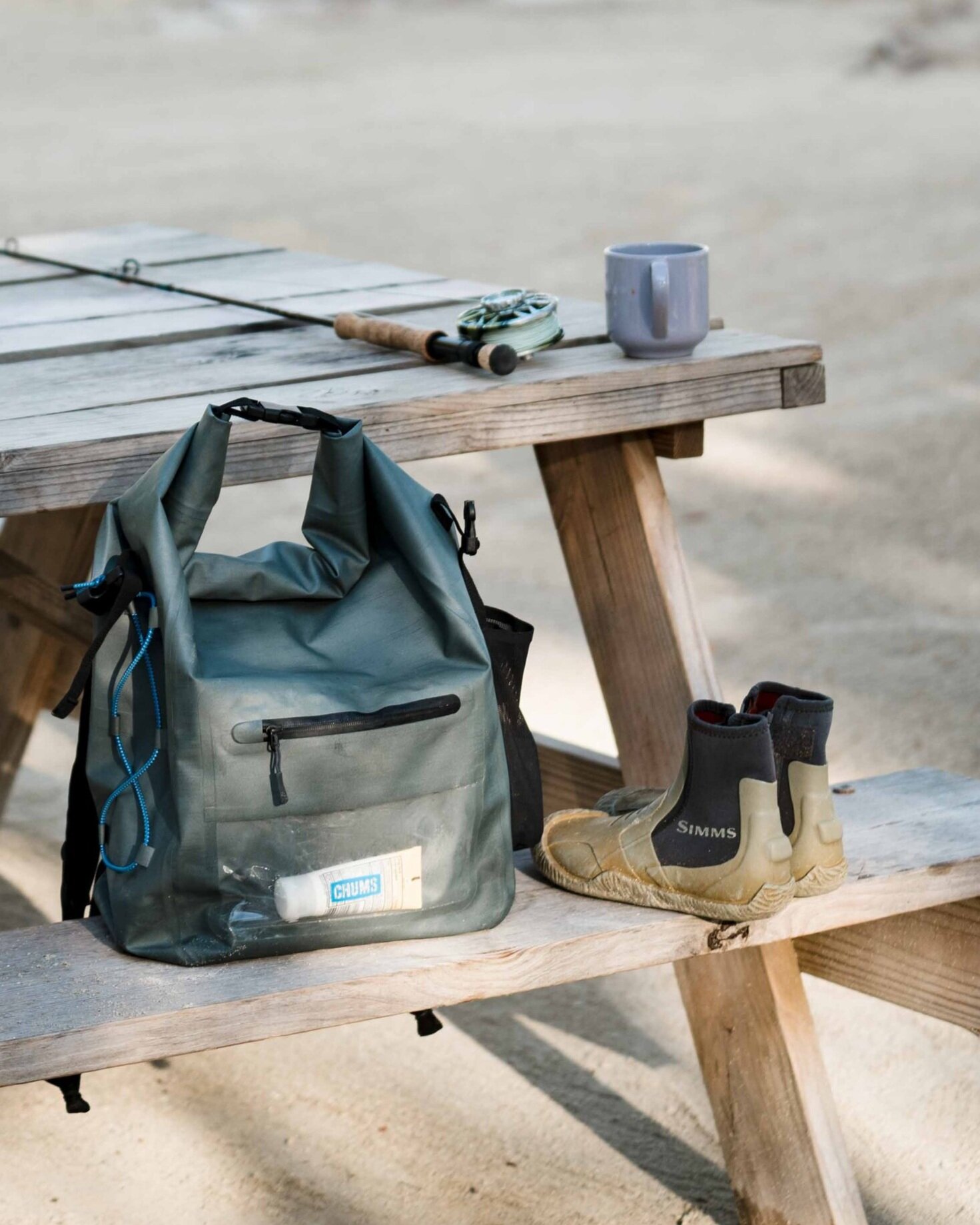
Wading shoes or boots for stalking flats fish, if desired - We recommend HARD SOLES
BOOTS. Simms, Patagonia, or Orvis makes a Zip-it style or Flats Sneakers that work very well.
Normal wading boots can be very clunky and heavy to pack. Our guides like to wade fish for tailing permit a lot of the flats in Southern Belize.
Fisherman’s pliers, clipper, and line cleaner
Optional: binoculars and snorkeling gear. Our guides can take you snorkeling on your fishing day if you would like. This does cut into the fishing time but can be a nice way to break up a week of fishing. Be sure to bring your own snorkel gear.
Fly Fishing Gear:
Recommended Permit Tackle:
Rods: 9 or 10 weight
Reel: Saltwater reel holding a minimum of 200 yards of 20-pound backing
Fly Line: Tropical Weight Forward Floating
Leader: 9-12 feet
Tippet: 12-20 pound test, 16 pound is the go-to. Fluorocarbon offers an advantage
Recommended Tarpon Tackle:
Rods: 11 or 12 weight
Reel: Saltwater reel holding a minimum of 200 yards of 30-pound backing
Fly Line: Intermediate and sink tip (350-500 grains sink tip). Having both of these lines makes you prepared for every scenario. We often will fish deeper channels most of the time and the heavy sink line is mandatory for this.
Leader: 4 - 6 ft. butt section, 16 - 20-pound class tippet and 60 - 100-pound shock tippet
Recommended Bonefish Tackle:
Rods: 7 or 8 weight
Reel: Saltwater reel holding at least 200 yards of 20-pound backing
Fly Line: Tropical Weight forward floating line
Leader: 9-14 feet - depending upon the fishing situation
Tippet: 2X-0X 8-12 pound test - fluorocarbon offers an advantage
FLIES:
Permit Flies:
Bauer’s Crab - Olive and Tan size 6-8 (sometimes size 4)
Camo Crab - Olive size 4 and 6
Del Brown's Permit Fly (Merkin) - Tan size #2 to 1/0
Enrico Puglisi's EP Crab - Olive, Tan, Tri, size 6, 4, 2
Various other Crab patterns in olive or tan - size 6-1/0 Smaller, lighter variations for the shallow flats
Bonefish Flies:
Pops' Bonefish Bitters, #6 & #8 (Olive and Amber)
Crazy Charlies - chartreuse, white, pink & brown (unweighted for outer flats) #6 & #8
Gotcha’s - white, pink, tan , #6 & #8
Tarpon Flies: sizes 3/0 to 4/0
Gummy minnow - size 2, 2/0
Apte-style tarpon flies in various color combinations. Dark colors tend to be better in the early morning and brighter colors work best when the sun is bright.
Deceiver patterns - various colors
Hopefully, this packing list will prepare you for your fishing trip to Belize. If you are in need of specific fly fishing gear we do offer rentals. Be sure to reach out to us at info@bluehorizonbelize.com for any specific questions in regards to the gear.

3 Tips to Prepare for Your Saltwater Fly Fishing Trip in Belize
Are you thinking about booking a fly fishing trip to Southern Belize? Or maybe you have booked your fly fishing adventure to Belize and want to make sure you are properly prepared to make the most out of your trip? A lot of anglers that come to fly fish Belize for the first time have minimal experience fly fishing the saltwater. Most are avid freshwater trout anglers that have dreams of catching a grand slam on the flats of Belize. So what are some tips to prepare yourself for your saltwater fly fishing adventure?
Are you thinking about booking a fly fishing trip to Southern Belize? Or maybe you have booked your fly fishing adventure to Belize and want to make sure you are properly prepared to make the most out of your trip? A lot of anglers that come to fly fish Belize for the first time have minimal experience fly fishing the saltwater. Most are avid freshwater trout anglers that have dreams of catching a grand slam on the flats of Belize. So what are some tips to prepare yourself for your saltwater fly fishing adventure?
Tip #1: Have the right gear and know-how to use it.
Make sure to come prepared with the correct gear for your Belize fly fishing adventure. While many lodges, outfitters, and guides do provide gear it is not always everything that you need to make the most of your Belize fly fishing trip. It is better to be prepared for your trip with your own gear, so you don’t have to assume or set your hopes on that the outfitter your use will have the proper gear for you.
For starters, it is recommended to have 3 rods rigged up and ready to go each day for your guided trip. We recommend setting up a 9 foot 7 or 8 weight rod for bonefish (floating line, 8-12 pound fluorocarbon leader, and a bonefish fly). The second rod would be your permit rod, a 9 or 10 weight rod (floating line, 16-20 pound fluorocarbon leader, and permit fly. The third rod would be your tarpon rod or cuda/shark setup. Typically this is setup with a clear intermediate tip line weight to match the rod, tarpon leader or wire leader if you are after cuda or sharks. It is also recommended to bring a sink tip spool or reel for this setup as fishing the deep channels for tarpon is common in Belize and a full sink line is essential. It is also good to bring a back up 9 or 10 weight rod and have it on the boat in case one of the rods breaks. Think of this as your backup permit rod. By having the right gear prepped and ready to roll you will be able to make the most of your time on the flats of Belize.
Tip#2:Make sure to have a reputable guide booked.
A local Belizean fly fishing guide will take the learning curve out of trying to learn the complexities of saltwater flats fishing and specifically permit fly fishing. The guides are out on the water 200 plus days a year and have been out on the water their whole lives. They know where the permit live, what tides to fish specific flats, and how to make your day unforgettable. More often than not tourists coming to Belize believe that DIY is the way to go and while this may be possible in some areas it is not as productive as fishing from a boat with a guide.
It’s important to book a guide farther in advance to ensure you are getting an experienced fly fishing guide. While some guides to claim to offer fly fishing they are more often taking out spin or reef fishing trips. So be sure to double check that the guide you booked is reputable and understands fly fishing.
The guides at Blue Horizon Belize are all english speaking and are knowledgable, personable, and patient instructors. We do our best to match clients with the best fitting guide for their personality and fishing preferences.
Tip#3: Practice casting heavy rods and be able to haul fly line with one fly line pick up.
One step you can take to prepare yourself for your fly fishing trip is to practice casting the heavier weighted rods. We recommend to head out to a lake or take your boat out and rig up the rods just like you would for your saltwater fly fishing trip. It also helps if you have a friend come along to help roll play real scenarios that would happen out on the flats. Instead of peeling off all the line and trying to double haul as far as you can focus first on accuracy. Have your friend call out “shots” of imaginary fish. For example, they say 12’o’cock 40 feet you then make the cast. Then again 3’o’clock 60 feet. Then again 10’o’clock 20 feet. Try going through different shots just like it would happen on the flats in Belize.
One component to keep in mind that most novice saltwater anglers seem to forget is to focus on being able to make your casting with one double haul. So if you have to make a 60 foot shot at 10’o’clock, try making this cast without false casting. Or once you have made your shot and your line is out, try to pick up all your line and make another shot without false casting.
One of the number one mistakes novice salt fly anglers make is too much false casting. Have confidence in your ability to shoot line with one double haul. So practice this at home and you will be better offer when you arrive to catch a permit of a lifetime in Belize.
Hopefully these tips will prepare you for a fly fishing trip of a lifetime to Southern Belize. Be sure to send us an email at info@bluehorizonbelize.com to check availability for fly fishing guides or to book your fly fishing adventure to Belize.
Wading Boots for Flats Fishing Belize
If you have booked a trip with Blue Horizon Belize, you have probably seen that we recommend bringing hard-soled saltwater wading boots. While this item is not essential especially if you are just going for one day, they do come in handy for certain scenarios out in the flats. It could make or break a day, especially for a beginner angler.
If you have booked a trip with Blue Horizon Belize, you have probably seen that we recommend bringing hard-soled saltwater wading boots. While this item is not essential, especially if you are just going for one day, they do come in handy for certain scenarios out in the flats. It could make or break a day, especially for a beginner angler.
You can get closer to a fish on foot as opposed to in the boat. Wading boots allow you to get out of the boat and get closer to a feeding or tailing permit. This is great for many novice anglers as it can mean making a 30-foot cast on foot instead of taking a 60-foot cast from the boat. While not every permit can be hunted down on foot, you will often have a shot or two on foot on average per day.
To be best prepared we recommend bringing down a pair of trusted flats wading boots so you can stalk a permit on foot.
Flats Boots we recommend:
*Please contact your local fly shop to see if they have any in-stock. #buylocal
Orvis Fishing Christmas Island Bootie $79.00: minimalist, lightweight enough to get the job done from the boat. Avoid this model if you plan to do a full day of wading on your own, no foot support. But great for quick off and on’s from the flats boat.
Simms Fishing ZipIt II Flats Booties $99.95: lightweight and easy on and off these are great for the angler who doesn’t need a lot of boot support and will just be using in and off the boat.
Simms Fishing Flats Sneakers $169.95: these are durable, long-lasting, and comfortable flats boots. If you plan to do some wading on your own these would be the ones. They will last a little longer and give you more traction.
Other options:
Sandals will not protect your feet from stinging coral but they will be better than going barefoot. Cheap water shoes are always an option but these tend to get pretty beat up fast. You can also use an old pair of sneakers with tube socks. Just know that the saltwater will eat them up pretty good. Normal wading boots built for waders with wading socks are a decent option but are extremely heavy to pack and can be timely to put on quickly. We do recommend a pair of flats specific shoes if you are fishing multiple days with us, you will thank us later.

Tailing Permit Tactics
In Southern Belize, we are in the epicenter for tailing permit. The vast pancake flats provide suitable feeding grounds for a hungry permit. When the tide shifts and the water moves onto the flats, permit move in and gorge on the crabs, shrimp, baitfish, even the sea urchins and small lobsters. Typically, this feeding frenzy will result in tailing permit.
Southern Belize is the epicenter for tailing permit. The vast pancake flats provide suitable feeding grounds for a hungry permit. When the tide shifts and the water moves onto the flats, permit move in and gorge on the crabs, shrimp, baitfish, even the sea urchins and small lobsters. Typically, this feeding frenzy will result in tailing permit.
A tailing permit is a happy permit and a happy permit is one that will eat a well-presented fly. So when you do encounter a tailing permit it is your time to shine here are some tips to follow.
Go for the Jugular.
“Hook him or spook him,” is the rule to live by on a tailing permit.
When you see a permit tailing and feeding, put that fly right in front of that fish. Think of a dinner plate and land it within a dinner plate of the permit’s mouth. You can aim for the head of the permit and hope that fly drops write into the feeding fish’s mouth. This is different from when you have a cruising permit or a school of permit. A tailing permit is less spooky, take advantage of this.
Get Close to the Fish.
Since a tailing permit is preoccupied with actively trying to stuff crabs into it’s mouth use this to your advantage. If you are in a boat, get out of the boat and take the hunt on foot. This allows you to get closer and have a good shot. It’s not uncommon for a tailing fish to come within 10-20 feet of you and not notice as it’s mind is on food.
Don’t Let Your Emotions Get in the Way
A tailing permit will absolutely get your heart rate going. So with this tell yourself before you go fishing that if you do encounter a tailing fish you are going to take a deep breath and relax, just focus on what you know and don’t let the pressure get to you. The mental game of permit fishing is real, so step up out of it and show the permit that you have confidence. You have control to catch that fish, so make it happen.
If you want to book a trip to have daily shots at tailing permit, there is no better place than the Blue Horizon Lodge with Blue Horizon Fly Fishing guides, led by legendary guide Lincoln Westby. To check availability you can email us at info@bluehorizonbelize.com.

What to Wear on Your Flats Fly Fishing Trip in Belize
Most people that want to enjoy a day in the sun on a flats boat down in Belize would think of wearing maybe swim trunks or a bathing suit and lots of sunscreen. But, most people who have been in a flats boat for a full day or wading the flats for a full day know that if you just wear a swimsuit you’re probably going to look like a lobster by happy hour. While a swimsuit is perfect to wear as a “base layer” below you will find a general guide of recommended clothing and gear you need to bring for your permit fly fishing adventure in Belize.
Most people that want to enjoy a day in the sun on a flats boat down in Belize would think of wearing maybe swim trunks or a bathing suit and lots of sunscreen. But, most people who have been in a flats boat for a full day or wading the flats for a full day know that if you just wear a swimsuit you’re probably going to look like a lobster by happy hour. While a swimsuit is perfect to wear as a “base layer” below you will find a general guide of recommended clothing and gear you need to bring for your permit fly fishing adventure in Belize.
While most all of our Belizean Fly Fishing guides have canopy’s on their boats. Often when fishing the canopy’s are down so the sun will be beaming down on you. If you prefer to have a guide with a canopy please let us know and let the guide know you would like the canopy up as much as possible.
Hat and Sun Mask (Buff):
Make sure to bring a baseball cap or wide-brimmed hat to keep the sun off your face. Many flats specific hats even have a black under-visor to absorb sunlight to make it easier to target fish. Many anglers prefer light-colored water-resistant hats in the flats. Simms Fly Fishing makes a few that are specific to the tropical flats.
A Buff of facemask is also essential to keep the sun off the back of your head and face. They can be bought almost everywhere and can be easily packed in your carry on bag. So don’t forget your buff as it will keep that sun off your face and prevent unnecessary sunburns.
Fishing Shirt or Sun Hoody:
A lightweight long sleeve fishing shirt is a great item to bring down to Belize for your days on the water. The classic Columbia PFG is one that many anglers prefer. The breathable shirts allow for comfortable fishing in the hottest conditions. The collar also protects you from the sun.
A sun hoody is more of a newer trend in flats fishing. The lightweight hoody keeps the strong UV rays off your skin thus, reducing your body temperature. The hoody also is nice as it provides UV sun protection on your head and face.
For women both a hoody and a long sleeve fishing shirt work great as a layer over a bathing suit, so you can still soak up some rays.
Pants or Shorts:
Many anglers prefer lightweight fishing pants as these protect your legs from getting sunburnt on a long day of fly fishing. Shorts and swim trunks are also a good option depending on your preference.
Packable Rain Jacket:
This is probably the most often neglected essential item to bring on your flats fly fishing trip to Southern Belize. You think you are headed to a tropical climate with warm temps, well often in the mornings before the sun is rising it can be a bit chilly out on the ocean. Especially if the waves are a little choppy and the water is splashing in the boat. So be sure to pack a lightweight rain jacket on your flats fly fishing trip. There is also always the chance of quick tropical rain systems that move through.
Footwear:
Most anglers who fish from a flats boat prefer to be barefoot to be able to feel the line if it tangles at your feet. This is a great option but if you are fishing for multiple days your feet may take a beating from the sun even with the aid of sunscreen. Another option is to wear some socks with traction on the bottom or lightweight boat shoes, sandals or even your wading boots. But remember one loud step and that tailing permit will be long gone. So we recommend barefoot and having a backup in case your feet do get a little sunburnt.
Also, be sure to pack your saltwater wading boots in the boat and have them readily available.
Polarized Sunglasses:
Polarized sunglasses are essential for your flats fishing trip. Many anglers bring two pairs, one as a backup or to wear when you take runs to the flats so one pair stays crystal clear of saltwater. Bringing some alcohol wipes in your kit is a good addition for cleaning the saltwater off your glasses. The flats fly fishing guides prefer typically Costa or Smith Glass lenses in the green or blue mirror lens for bright days or the copper or grey lens on cloudier days.
Waterproof Dry Bag:
Packing all these gear into one waterproof dry bag is a great way to stay organized. Simms, Patagonia, Orvis, and other fly fishing companies make a handle of dry bags, backpacks, slings, duffels, and hip packs that work great for flats fly fishing from a boat. While you can put your bags in the hull to keep them dry having a nice waterproof bag is a great addition.
Guide tip: Have a plastic bag or fly puck of some flies and tippet that you can stick in your pocket if you need to hop out of the boat to hunt a fish down. This makes it so if you break off or have to change flies you can do so quickly.
If you have any additional questions about what to wear for your flats fishing trip in Belize, feel free to reach out to us at info@bluehorizonbelize.com. We hope that this aids and prepares you to catch your grand slam a permit, bonefish, and tarpon down in Belize!

DIY Fly Fishing in Belize
If you wanted to do some DIY fly fishing in Belize your best option would be to stay out in the Cayes or islands off from the mainland. These cayes are located on the barrier reef, they actually make up the barrier reef. Around the islands, marine life is rich in biodiversity providing great habitat for many game fish like bonefish, permit, and tarpon.
The fishing grounds in Belize are endless. Having the largest living barrier reef, second largest barrier reef (behind the great barrier reef), the coast of Belize is dotted with hundreds of small islands called Cayes (pronounced “Keys”). Providing miles and miles of fishable water for the avid flats angler. The question is how do you find and access the fly fishing flats in Belize?
The barrier reef in Belize does span the whole coastline of Belize but the reef can be quite far from the mainland at many parts of the country. For fishing this means that the flats are only accessible by boat, making it challenging to DIY fish from shore. While on the mainland fish do move through and there can be opportunities for gamefish like jacks busting bait in the mornings, the potential for tarpon moving through specific channels or hanging around in the dock lights at night, barracuda, and other smaller reef fish. But for the most part the fishing from the mainland can be quite unproductive.
If you wanted to do some DIY fly fishing in Belize your best option would be to stay out in the Cayes or islands off from the mainland. These cayes are located on the barrier reef, they actually make up the barrier reef. Around the islands, marine life is rich in biodiversity providing great habitat for many game fish like bonefish, permit, and tarpon.
The most pressured and popular (for a good reason) is the island of San Pedro in northern Belize. The island offers great DIY fishing right off the beaches and can be very productive at times. But it does see a good bit of pressure and the fish can be pretty keen due to this.
There are many great lodging options with productive flats either located right at the island or nearby and can be accessed by kayak or paddleboard. A few favorites for many anglers is the Ranguana Caye Island Resort and Thatch Caye Island Resort. Both have fly fishing flats with resident bonefish and often also host feeding permit and other flats species like triggerfish. Just make sure to bring your own fly fishing gear as typically most of these island resorts do not have gear on hand for guests.
Weather also plays a large factor in having good conditions for DIY fly fishing in Belize. If the wind is up and the waves are choppy is can be very challenging to fish the islands and it can also be unsafe to take out a kayak or paddleboard. So do keep this in mind.
If in fact, you wanted to book a day of guided fly fishing while you're in Belize to understand the fishery, Blue Horizon Belize does offer day trips in Hopkins, Placencia, and the surrounding Cayes. To inquire about booking a trip you can email info@bluehorizonbelize.com.

Hosted Saltwater Fly Fishing Trips in Belize
Why host saltwater fly fishing trips?
That is the million-dollar question..well it’s simple for many people. They want to bring together a group of friends to go on an unforgettable fly fishing adventure. But if you do host a trip, Blue Horizon Belize will also offer you a free or comped spot on the trip. While restrictions do come into play here as typically you will need at least 7 paying fly fishing package guests in order to claim that host spot. But if you think you may have some clients that you want to take on a Belize Fly Fishing vacation hosting a trip may be a perfect option for you. If you also have 8 or more friends that want to plan a fly fishing trip, you can also apply the comped spot to discounting the rate for everyone. So this is a great option to get the price down.
At Blue Horizon Belize we allow our guests and customers to “host” groups of anglers at our various resorts that we operate at. What this means is if you are a host you will be in charge of getting all the deposits for your group’s trip, taking care of travel questions, and any other questions your group may have. We are also here to help aid you in the process of being a host.
Why host saltwater fly fishing trips?
That is the million-dollar question..well it’s simple for many people. They want to bring together a group of friends to go on an unforgettable fly fishing adventure. But if you do host a trip, Blue Horizon Belize will also offer you a free or comped spot on the trip. While restrictions do come into play here as typically you will need at least 7 paying fly fishing package guests in order to claim that host spot. But if you think you may have some clients that you want to take on a Belize Fly Fishing vacation hosting a trip may be a perfect option for you. If you also have 8 or more friends that want to plan a fly fishing trip, you can also apply the comped spot to discounting the rate for everyone. So this is a great option to get the price down.
What makes a good host?
Know what your group wants and understand what the fishery and lodge offers. At Blue Horizon Belize, we are heavily focused on permit fishing. This type of fishing may not be for everyone so be sure to communicate to your group what exactly each day looks like and what the fishing catch rates and expectations should be. That’s why we are here every step of the way to help you plan your hosted fly fishing trip to Belize.
If you are interested in hosting a saltwater fly fishing trip in Belize, the team at Blue Horizon Belize is here to help you, reach out to us at info@bluehorizonbelize.com to check availability.