
BLOG

Mastering Permit on the Fly in Belize: 6 Essential Tips
Learn 6 essential tips for successful fly fishing for permit in Belize! Discover how to spot, cast to, and land these elusive fish. Expert advice from Blue Horizon guides and staff. These tips will help you catch a permit in Belize.
Fly Fishing for Permit in Belize: 6 Essential Tips
Fly fishing for permit is often considered the ultimate challenge in saltwater angling. These intelligent and wary fish demand precision, patience, and a keen understanding of their behavior. For anglers heading to the beautiful flats of Belize in pursuit of this prized species, mastering a few key techniques can significantly increase your chances of success. At Blue Horizon Belize, our experienced guides have witnessed firsthand what it takes to hook and land a permit on the fly. Here are six essential tips to help you achieve your goal.
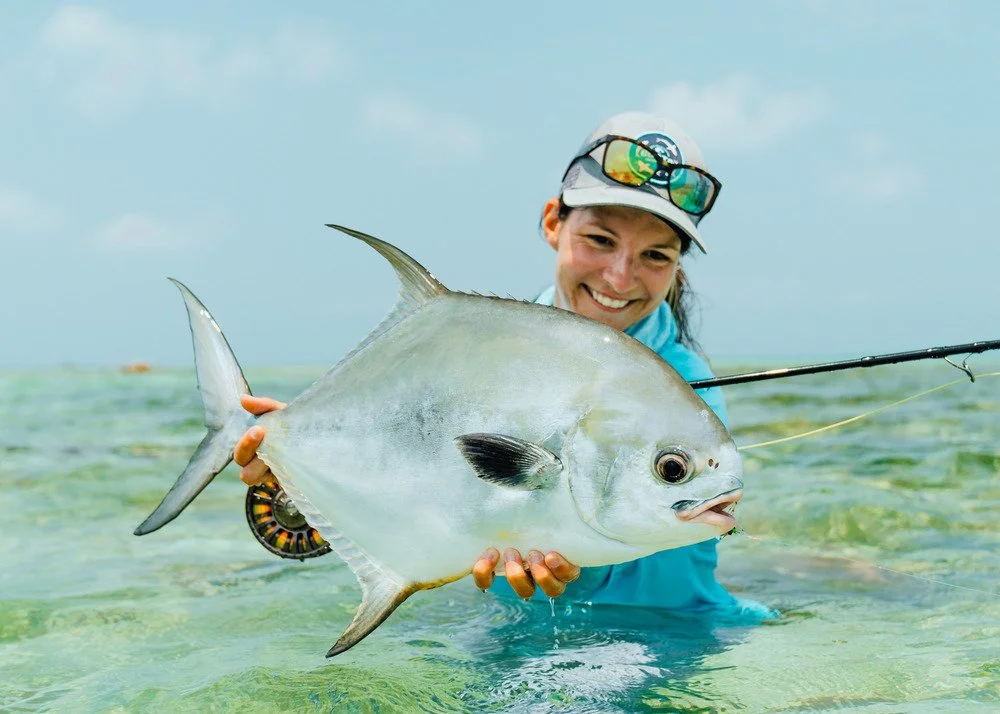
A permit landed in Belize at Blue Horizon Lodge.
1. Spotting Permit: The Art of the Hunt
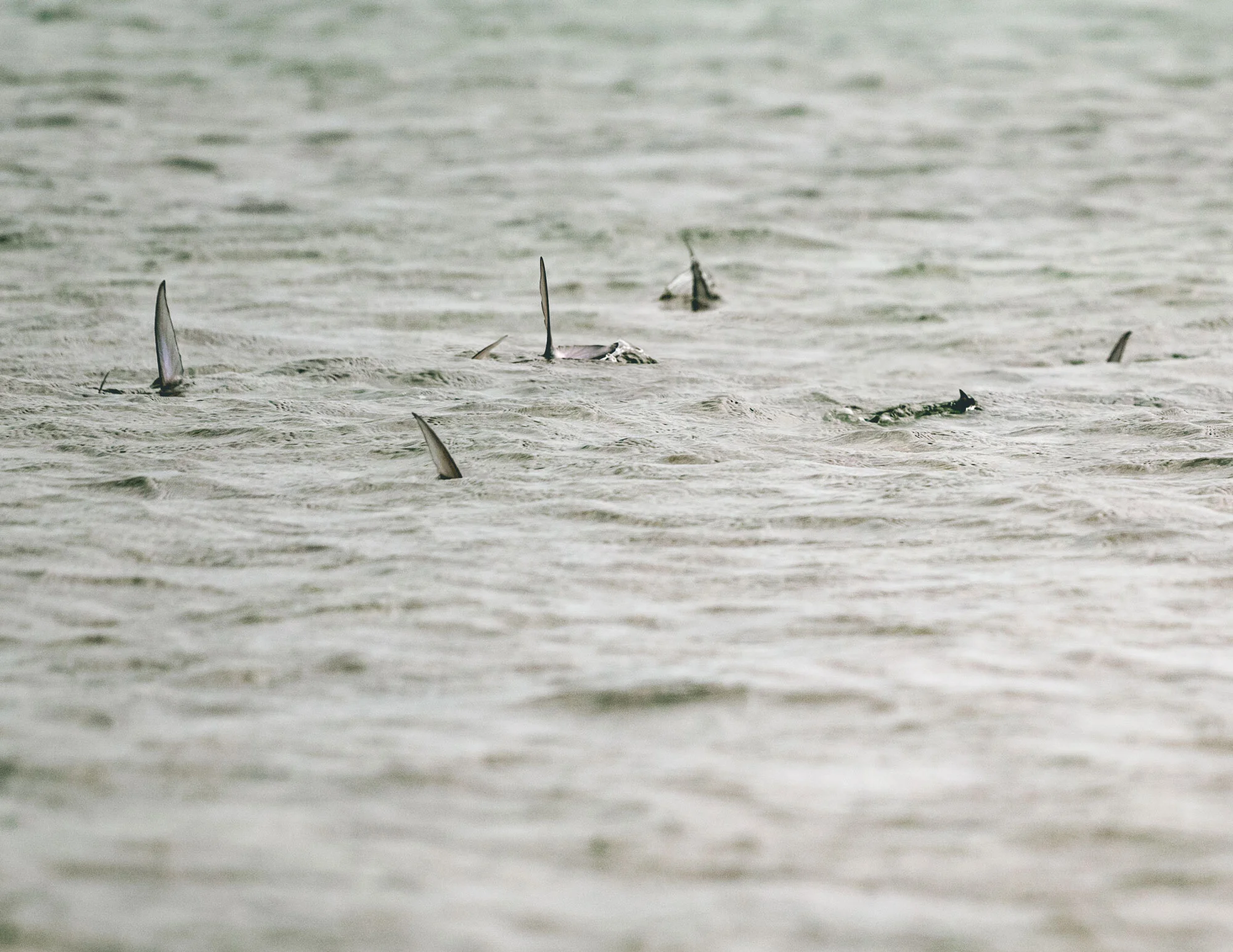
When fly fishing for permit, a crucial first step is mastering the art of spotting permit in their natural habitat. This is often referred to as "hunting." Begin by expanding your field of vision, avoiding focus on any single point. Instead, systematically scan the horizon for "tailing" permit (easiest way to identify these fish) or look beneath the water's surface for "cruising" fish. A helpful technique is to look for interruptions in the natural patterns of the coral or turtle grass bottom or a break in the pattern of the water's surface – these "breaks" in the ocean's rhythm can signal a permit or school of permit. If something catches your eye, quickly focus in that direction to identify the source. The initial sighting of both tailing and cruising permit can be subtle. Try scanning from left to right (or right to left), starting close to the boat and gradually extending your gaze further. Repeat this process methodically.
PRO TIP: Polarized glasses are indispensable for this, so we'll assume you have a good pair. While wearing them, try slightly tilting your head from side to side, at an diagonal. This shift can enhance the polarization effect and improve underwater visibility, especially during the lower light conditions of early morning and late afternoon/evening.
2. Never Lose Sight: Tracking Permit in the Flats
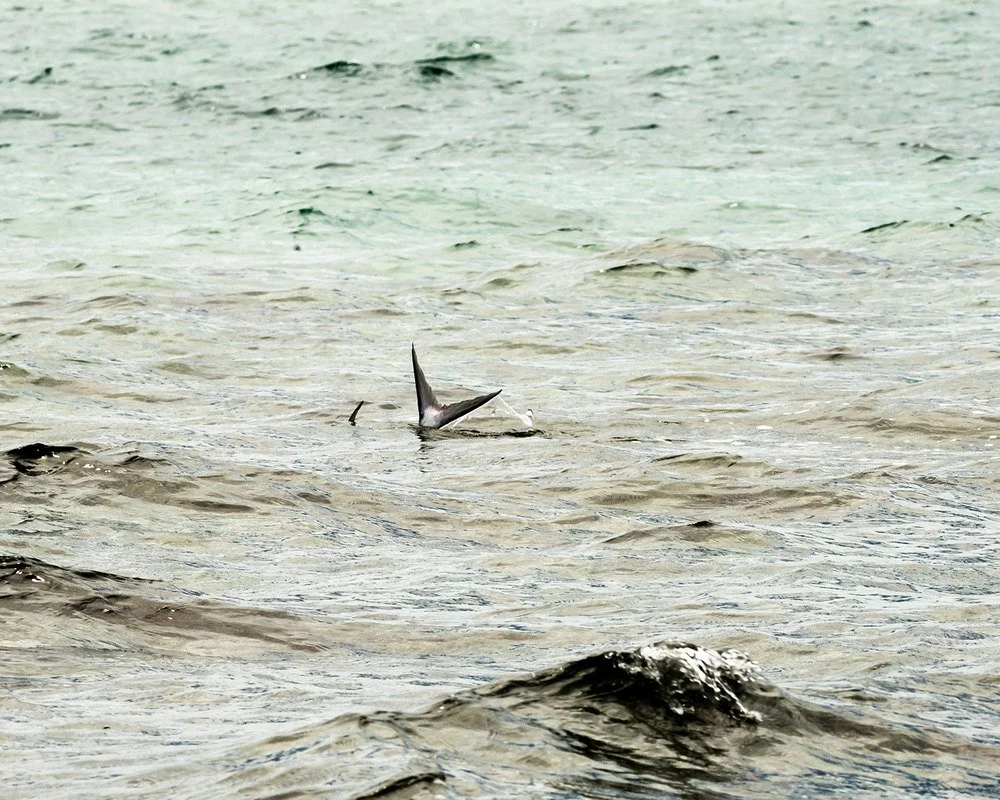
A permit tailing in Belize.

The break in pattern of the water you are looking for.
Once you successfully spot a permit that is tailing or swimming, resist the urge to look away. These fish possess an almost ghostly ability to disappear. One moment they might be clearly visible, and the next, with a swift kick of their tail or a subtle shift of their body, they are gone. If you lose sight of the fish, use your best judgment to anticipate its movement. Consider its swimming speed and direction, and focus your search on where you believe it might have gone. If you observed it swimming in a specific direction at a certain pace, look further out along that path. Often, they will reappear right where you anticipated them to be.
3. Accuracy Over Distance: Effective Casting for Permit

Casting with accuracy increases your odds of catching a permit.
Many anglers believe that catching a permit on the fly requires exceptionally long casts, often thinking they need to reach distances of 70-80 feet or more. However, the reality is that precise fly placement is far more critical than casting distance. Accuracy is the name of the game, and the most successful anglers in fly fishing for permit can deliver their fly with pinpoint precision. You might be surprised at how close to you or the boat these fish will swim, particularly when they are focused on feeding. If you can consistently cast within a 40-50 foot range with accuracy, your likelihood of landing a permit in Belize significantly increases.
Knowing precisely where to cast your fly is key. You need to present the fly close enough for the permit to see it, but not so close that the impact of the fly landing spooks the fish. Often, anglers cast too far away, fearing they will scare the fish. However, a fly cast too far is unlikely to be seen by the fish. The adage "Spook 'em or Catch 'em" holds true. Don't be afraid to cast closer to the permit than your initial instinct suggests. It's generally better to err on the side of casting slightly too close than too far away.
PRO TIP: If the permit is moving quickly, you'll need to cast further ahead of its current position, anticipating where it swimming to, in order to allow the fly enough time to sink – sometimes as much as 10 feet. Conversely, if the fish is tailing and actively feeding, casting a few inches from its face can often be the most effective approach. Trust your instincts to determine the best presentation.
4. Imitate the Prey: Fly Stripping Techniques for Permit
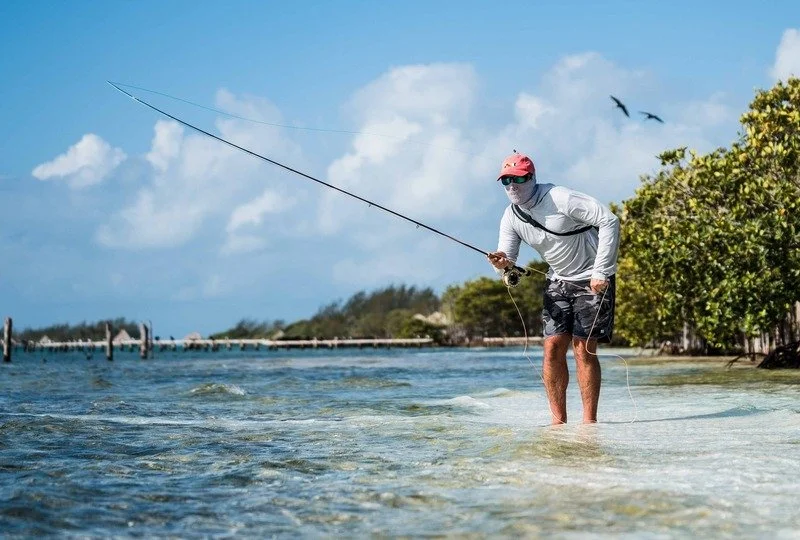
It is important to imitate the prey your fly represents to entice a strike from a permit.
Another common mistake anglers make when fly fishing for permit is stripping the fly too fast, too aggressively, and with too much movement. Our guide team has seen the catch rate of any of our guest improved dramatically once they are able focused on minimizing fly movement (at least while fishing with a grab pattern). Concentrate on keeping the slack out of your line so that any movement of the fly is subtle. More importantly, ensure there is no slack in the line, allows you to feel even the slightest take or if your fly is dragging on the bottom. This subtle approach is particularly effective when using a crab pattern, as crabs typically flee briefly and then try to hide from predators. If you are using a shrimp pattern, a slightly faster retrieve with a series of short, rapid strips often works best.
PRO TIP: Engage with the fish's behavior. Once you see a permit turn its attention to your fly, adjust your stripping action to mimic the natural movement of the fly you are presenting. For a crab pattern, be sure to incorporate pauses in your strip, allowing the fly to sink, imitating a crab fleeing and then seeking cover. When a permit shows interest in your shrimp pattern, you might increase the speed of your strip to simulate a shrimp panicking and trying to evade a predator. Be responsive to the fish's actions. If a permit chases your fly and then stops, experiment with increasing, decreasing, or even stopping your retrieve momentarily. Sometimes, a fish will inspect the fly multiple times before either eating it or rejecting it.
5. The Strip Set: Hooking Permit the Right Way

Don’t trout set!
When a permit eats your fly, remember this crucial rule: NEVER EVER EVER trout set (lifting the rod tip sharply and quickly). Instead, keep the tip of your rod pointed towards the fish and continue stripping the line at the same pace you were using to entice the strike. If the fish eats aggressively and turns quickly, you can release the line to avoid a break-off, as they often hook themselves in this scenario. Sometimes, a permit will eat the fly, but continue swimming towards you. In this situation, it's vital to keep stripping to maintain tension on the line; otherwise, the fish will likely spit the fly before you can achieve a solid hook set. A trout set, lifting the rod tip too early, will almost always result in pulling the fly out of the permit's mouth. By focusing on keeping the rod tip down and maintaining your retrieve until you feel the line pulling firmly from your fingers, you will significantly increase your chances of landing that fish. Once you feel the solid pull, then you can lift the rod tip and fight the fish as you would any other.
6. Breath: Staying Calm When Targeting Permit
Perhaps the most important piece of advice when fly fishing for permit is to control your emotions. These fish have a way of getting anglers incredibly worked up. However, the surge of adrenaline, dopamine, and cortisol can actually work to your disadvantage. Deep, slow breathing is the most effective way to maintain your composure. Inhale deeply to a count of 4 or 5, and exhale slowly to a count of 5 or 6, consciously focusing on relaxing your body as you exhale. Remember, it's just a fish! You've likely caught hundreds of fish before, and by keeping your heart rate steady, you'll make better, more accurate casts, and that permit is far more likely to inhale your fly as soon as it sees your fly!

Keep calm, with deep breaths, in order to make the best cast in these exciting situations.
Successfully fly fishing for permit in Belize is a rewarding experience that tests your skills and patience. By focusing on these six key tips – mastering the art of spotting, maintaining visual contact, prioritizing casting accuracy, employing effective stripping techniques, executing the strip set, and staying calm – you'll significantly enhance your chances of landing one of these magnificent fish during your next trip with Blue Horizon Belize. We look forward to helping you achieve your permit fishing dreams on the beautiful Belizean flats!
For more information about fishing with the team at Blue Horizon Lodge, you can email or call 800-313-1672

Permit Fly Fishing 101 [With Basic Tips]
…Our experienced guides greatly increase your chance of catching this tricky fish.
Basic Tips to Permit Fishing:
Make sure you are confident and familiar with the gear you are using. Be sure to cast the fly rod prior to the trip or as soon as you get on the boat. You want to be able to cast the fly accurately into a dinner plate-sized target at about 40 feet.
Permit Fly Fishing 101 [With Basic Tips]
Permit, are known as the "Holy Grail" of fly fishing, are by far the most difficult, picky and frustrating fish you'll encounter on the flats. They have superb eyesight and a well-developed sense of smell.
Due to body shape, permit seem to be much more comfortable in deeper water. Although it is fairly common to see a permit with its tail and dorsal fin sticking out of the water, it usually won't remain that way for long. Permit seem to suddenly appear on a flat for a brief feeding spree and then fade back into the safety of the deeper water. They're constantly on the move.
Quick, accurate casting skills (and a lot of luck) are essential. Our experienced guides greatly increase your chance of catching this tricky fish.
Basic Tips to Permit Fishing:
Make sure you are confident and familiar with the gear you are using. Be sure to cast the fly rod prior to the trip or as soon as you get on the boat. You want to be able to cast the fly accurately into a dinner plate-sized target at about 40 feet.
Assess every encounter differently. Since permit can be tough to catch, each encounter with them is different. So be aware of each scenario, ask yourself different questions. Is this fish tailing? Is this fishing moving? Is it a school of fish? Just a single fish? Is there chop to the water or is it straight calm? All these different questions will change the way you target the fish. So ask your guide what he would do in these different scenarios.
Keep in mind to try to cast the fly far enough away from the fish that the splash will not spook it but close enough that it will first notice the fly when the pattern drops through the water column.
Never give up on a fish. If you think you blew the shot and permit spooked, don’t give up. It’s common for a permit to initially spook and then come back and eat the fly. So listen to your guide and watch the fish closely. And never pull that fly out to early. Most permit anglers have made this mistake before.
Understand the hookset. A big part of catching the permit is getting a proper hookset. The first step to do this is to make sure you have the slack out of the line and you are tight to the fly. So after you make a cast, typically you will need to strip in a little to get the slack out. Once the slack is out you have a tight connection to the fly and can almost feel when the permit eats. Watch the fish closely and listen to your guide. If the fish eats it set the hook with a strip set and never lift that rod tip up.
Think about how to land a permit before you hook a permit. What do you do once you hook a permit? More often than not you are going to let this fish run and the guide will use the boat to the advantage. In Belize, coral can break you off very fast, so if you are around any coral raise the rod high so that the line does not wrap on coral. Also, be sure to clear your slackline easily and avoid wrap-ups on unnecessary gear.
SUGGESTED GEAR:
Rod: 8,9, or 10 wt (Stiff to cast crab patterns in the wind). Standard is a 9 foot 4 piece rod.
Reel: Anodized, corrosion resistant saltwater model. Should be able to hold a full line plus 300 yards of 20 or 30 lb. backing. A high quality smooth disc drag is essential.
Line: Tropical Floating Line to match the line weight.
Leaders: 10 ft. 16 pound leaders are standard. Extra spools of 16 and 20 lb. Saltwater tippet are nice to have.
Flies: A large selection of crab and shrimp patterns in a variety of sizes, colors, and weights. Tan, olive and various shades of brown seem to be the most effective colors for most Belizean waters. Be sure to have a variety of different sink rates.
Hopefully, these tips and gear recommendations will help you in your journey to catching more permit on the fly. Be sure to send us an email to check availability for guided fly fishing in Belize and availability at the Blue Horizon Lodge. One of the finest permit destinations in the world.