
The Fly That Changed Fly Fishing for Permit
The Legend of the Bauer Flats Crab: How One Fly Changed Permit Fishing Forever
If you’ve ever stood on the bow of a skiff, staring across the blue-green water, waiting to catch a glimpse of that distinct black tail, then you know that permit can be one of the most challenging fish to catch on a fly. They are notoriously moody, possess incredible eyesight, and have an infuriating habit of inspecting a fly only to turn their noses up at the last possible second, swim off… as the give you the middle fin!
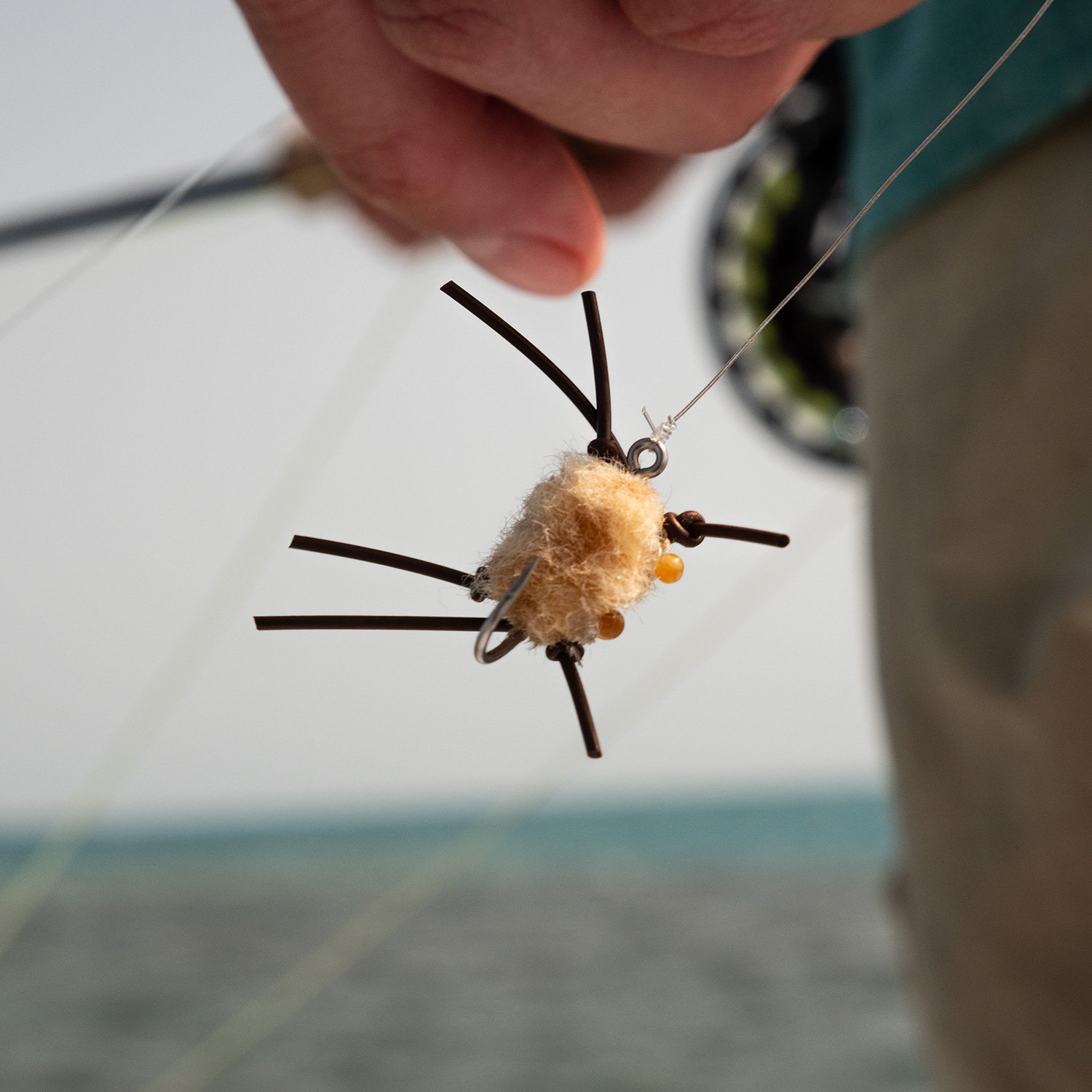
To catch a permit, you need more than just luck and the perfectly place cast—you need a fly that behaves exactly like the real thing without spooking the fish when it hits the water. Enter the Bauer Flats Crab (often just called the Bauer Crab), a pattern responsible for bringing hundreds of permit to hand and securing its creator’s legacy as a saltwater pioneer.
The Man Behind the Pattern
The story of the Flats Crab is inextricably linked to its creator, the late Will Bauer. Originally from Missouri, Will worked TWA (Trans World Airline for you younger folks), traveling the globe and fueling a deep love for adventure and exotic fisheries. After a successful stint running a pallet business in California and a fly shop named "McBauer's" in Anchorage, Alaska, Bauer took a live-aboard trip to Belize.
On the very last day of that trip, Will hooked and lost a single permit. He later admitted that one fish completely changed his life. Hooked on the pursuit to catch more permit, Will pioneered the permit fishery in southern Belize. He opened Ranguana Caye Lodge in 1985 (the first dedicated fishing lodge in the region) and later helped build our famed Blue Horizon Lodge alongside legendary guide Lincoln Westby.
But to consistently catch the permit he was seeing on the flats of Belize, Will needed a better fly. The flies available for permit at the time, didn’t get the interest of the fish he was encountering.
Solving the Permit Puzzle
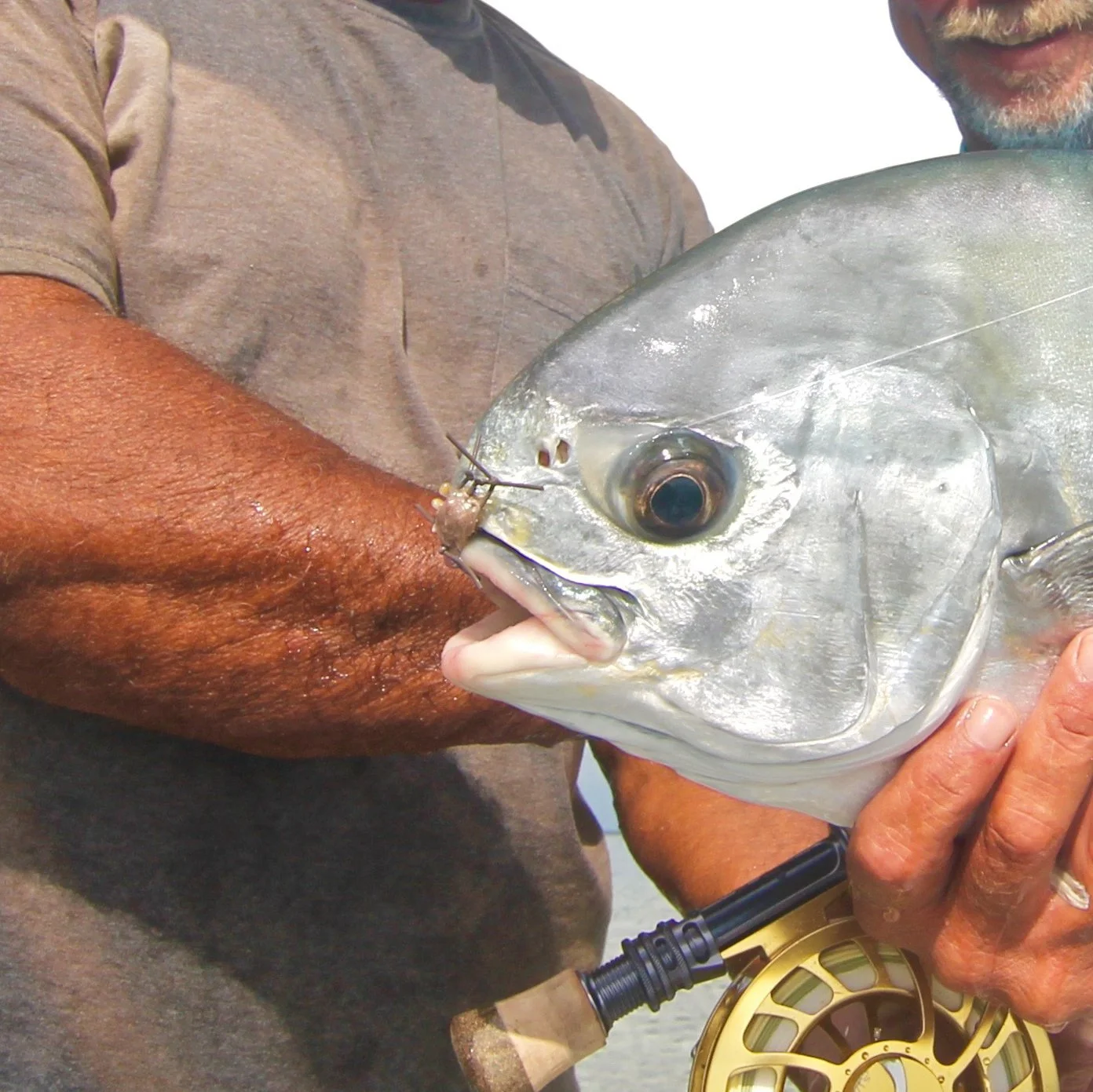
Permit fishing on the shallow flats of Belize, particularly when targeting actively feeding, tailing fish, presents a unique mechanical challenge. If a fly is too heavy—like many of the epoxy crab patterns of the era—it crashes into the water and immediately spooks the fish. If it’s too light, it won't sink fast enough to reach the bottom where the permit are looking for food.
Will’s stroke of genius was borrowing a material primarily used by trout anglers: McFly Foam.
Typically used to tie egg patterns for trout and salmon, McFly Foam is a synthetic yarn that absorbs water almost instantly. By shaping this material into the wide, round silhouette of a Gulf Coast or Green Reef Crab, Bauer created a fly that landed softly on the surface but sank quickly once saturated.
Anatomy of the Bauer Flats Crab
What makes this fly a permanent staple in the boxes of anglers traveling to Belize, Mexico, and the Caribbean?
The Soft Landing: The absorbent foam body prevents the dreaded "plop" that sends nervous skinny-water permit running for the deep.
Hook-Point Up Design: The fly is weighted and balanced to sink and ride hook-point up. This allows it to mimic the defensive posture of a real crab and be dragged across broken coral, sand, and turtle grass without snagging.
A Lifelike Silhouette: Trimmed wide and round, it perfectly matches the shape of natural crabs found on the flats. Lively rubber legs vibrate in the current to simulate a fleeing or defending crustacean.
A Touch of Flash: Many variations feature a subtle glimmer on the underbelly to grab the attention of a cruising fish.
How to Fish It
The Bauer Crab is not a fly you want to strip aggressively. It’s meant to be fished with a "strip and drop" technique.
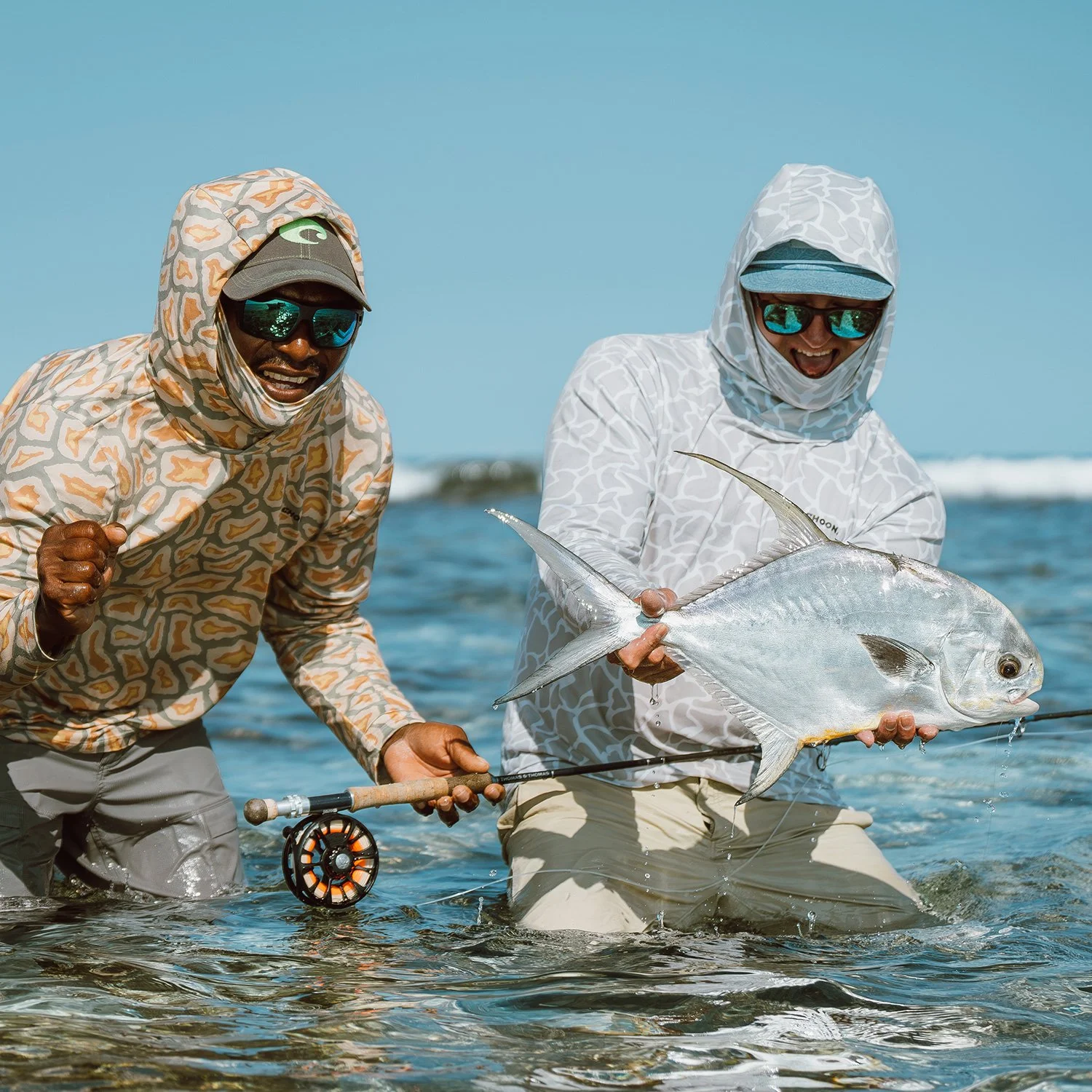
When you spot a cruising or tailing permit, cast the fly and let it settle completely to the bottom. Give it a long, slow strip to create a small "puff" of sand or mud to get the fish's attention, and then stop. Let it sit there. The natural movement of the rubber legs in the current will do the rest. If you've placed it right, the permit will tip on its nose, and you'll see that iconic tail fan excitedly as it eats. NOTE: be sure to keep your line tight and when you see the fish ‘tip’ to what you believe to be your fly, give a quick (but not too firm) strip set. A few inches is plenty. If you move it too much, you risk spooking the fish (if it wasn’t on your fly) or move the fly too far away from the fish, so they’ll never find it. A quick, small strip set is all that is needed to set that hook.
A Lasting Legacy
Will Bauer passed away in May 2023, leaving behind an incredible legacy in the saltwater fly fishing community. He helped put Belize on the map as the permit capital of the world, mentored guides, and shared his passion with countless anglers.
Today, whether you are tying it in olive for the grassy flats or mottled tan for white sand, the Flats Crab remains a testament to his ingenuity. It’s proof that sometimes, the best way to catch the most difficult fish in the ocean is to keep things simple, observe nature closely, and borrow a little trout foam when you need it.
Even now, over 30 years later, the Bauer’s Flat Crab, is still one of the number one producing flies in our fishery, and the ‘go to’ of many guides in the region. Do you have some in your fly box?